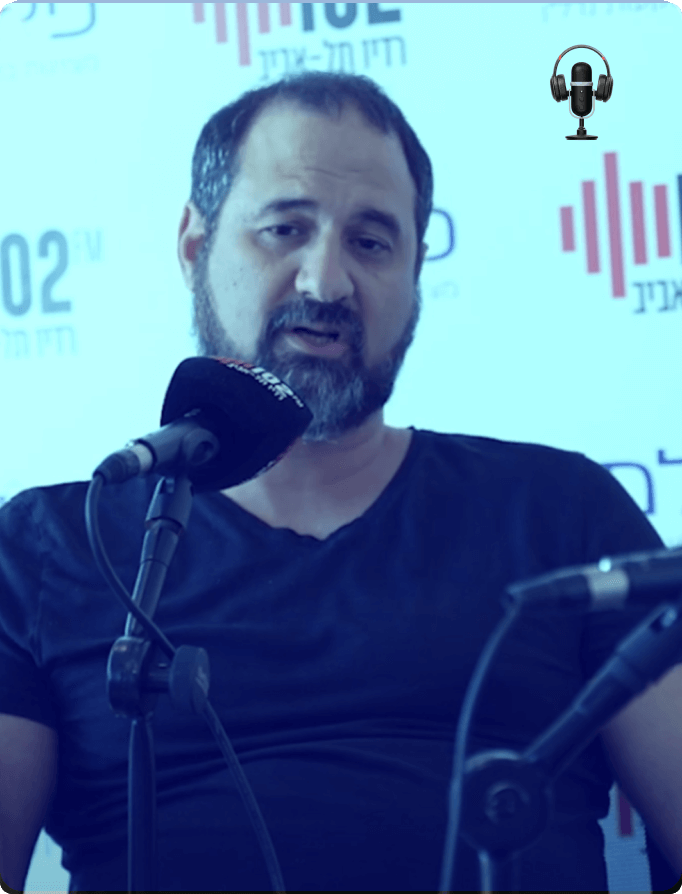
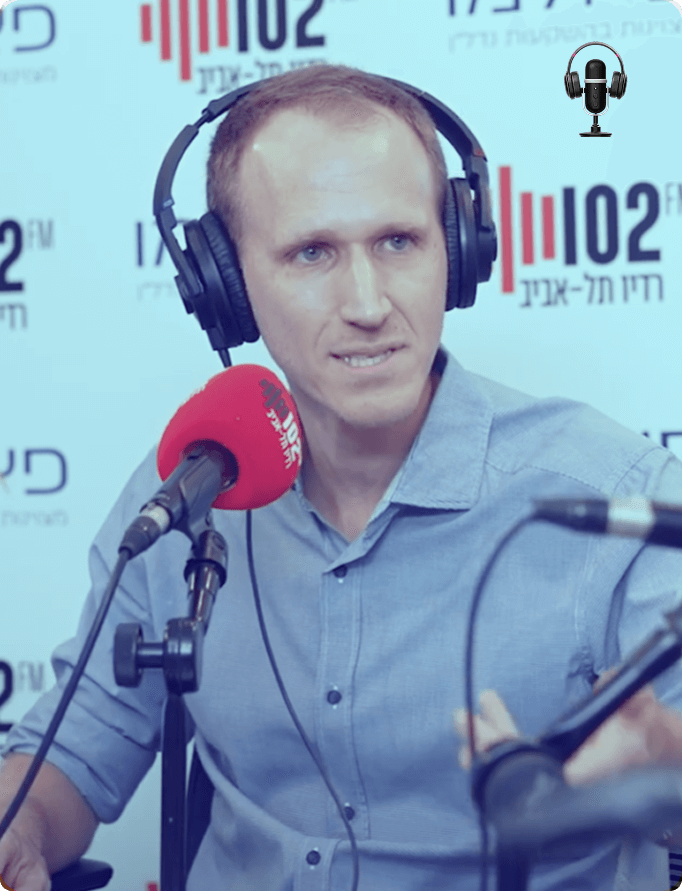
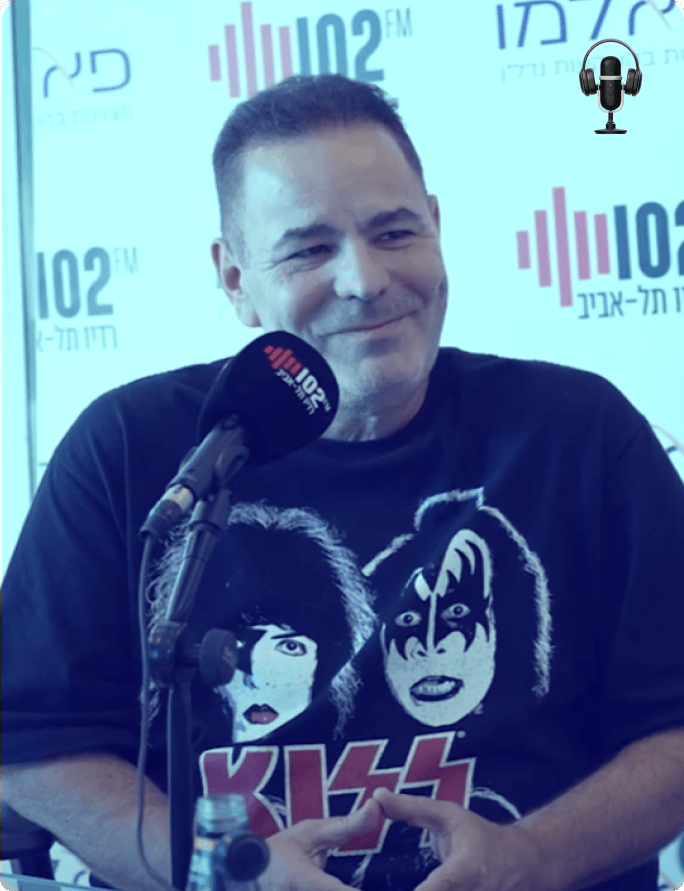
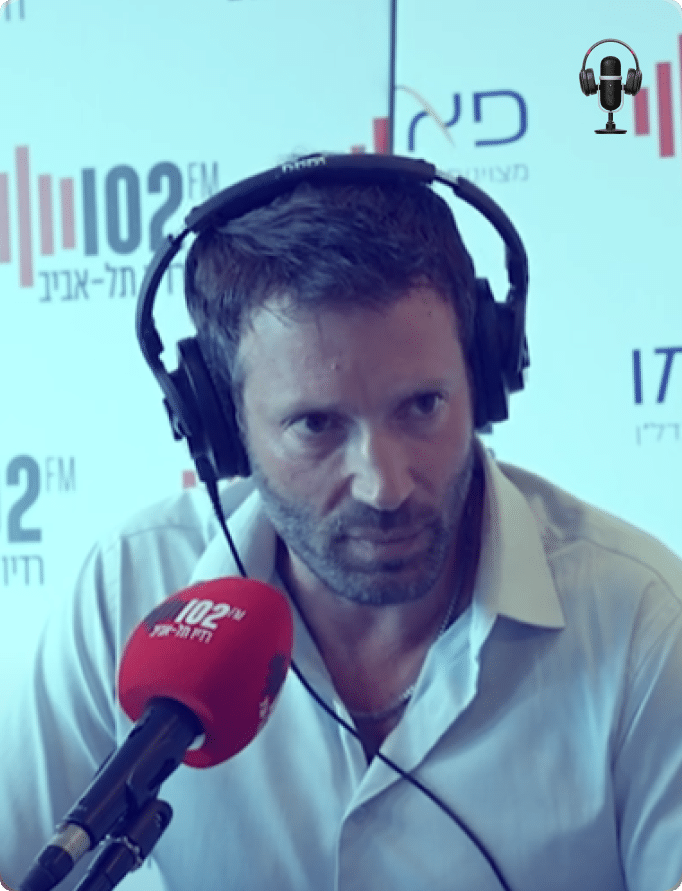
The show “Building Far,” hosted by Merav Miller and Aviv Cohen, featured the one and only Zohar Levkovitz, whom many know as “The Shark” from the hit TV show, but who is much more than that—he is a leading high-tech entrepreneur and investor. He is a multifaceted individual deeply connected to his roots, with a unique business and social philosophy, and a profound hope for Israel’s future. What did Levkovitz have to say about investments, identity, and social activism?
In the latest episode of "Building Far Away," the show hosted by Meirav Miller and Aviv Cohen, which focuses on investing in Greece and buying property in Greece, along with a variety of other topics, the show featured Zohar Levkovitz, an investor, entrepreneur, and social activist. In conversation with him, Levkovitz spoke about his roots in the north, the social agenda behind his participation in the show “The Sharks,” and the inherent risks in any investment.
"A native of the North, sponsor of the Galilee basketball team"
Levkovich presents himself first and foremost as a “son of the North” and “sponsor of the Galilee basketball team.” In this self-identification, he refers specifically to the original Hapoel Upper Galilee team, the historic club with which he was involved back in the days of Pini Gershon. He explicitly distinguishes it from later incarnations such as Gilboa/Galil, because “the distance between Gilboa and the Galilee is like the distance between Tel Aviv and Be’er Sheva.” Levkovich’s geographical journey began at Kibbutz Dafna in the north, continued for many years in San Francisco and Silicon Valley, and finally, “like everyone else,” he says, he returned to Tel Aviv.
"Tough but to the point": The path to "Sharks" and its impact
Levkovich gained widespread fame for his role on the show “The Sharks,” where he earned a reputation as “tough but down-to-earth,” as he describes himself. He appeared on four seasons of the show but chose not to return for the fifth. The reason for his departure stemmed from a feeling that “I didn’t age well with the show and gradually turned into an ‘old Polish grump.’” In addition, he noted that the show’s authenticity had been compromised, especially during the protests surrounding the judicial revolution. “When they block the Ayalon Highway in the morning and then two hours later are sitting in the studio filming, it loses the truth behind the show,” he says.
Despite his departure, his initial motivation for joining “The Sharks” was deeply rooted in social considerations. He initially declined the offer, but a conversation with a successful American “Shark” changed his mind. That Shark explained how the show “increased entrepreneurship in socially and geographically marginalized areas by 18% in the United States,” Levkovitz recounts. His aspiration was to replicate this impact in Israel, and he believes the show has indeed achieved that: among other things, he recounts that a young Palestinian from Abu Ghosh told him he is studying business administration by watching the Arabic-dubbed version of “Sharks” at Al-Quds University. In the ultra-Orthodox community in Bnei Brak, where televisions are uncommon, Levkovitz and the show are “superstars, and people memorize every word,” he says.
Levkovich compares this social mission to his involvement in the Space project, “which aims to inspire young Israelis that there is a future beyond becoming a soccer player or a model, and to encourage them to study science.” He sees “The Sharks” as a platform that has helped promote this message. Today, he is also involved with Unistream, an organization with a similar goal of fostering entrepreneurship and technology among youth in peripheral areas.
Although he acknowledges the show’s entertainment value—comparing it to “porn” in the sense that “there are real elements to it, but don’t try everything at home”—he believes the show offers very important tips and tremendous value, especially for young people in rural areas.
"Real estate is too heavy, too big, too ugly": The Investment Philosophy
One of the most striking aspects of Levkovich’s financial philosophy is his intense aversion to real estate. He openly admits that he neither likes nor understands the field, finding it “too heavy, too big, too ugly.” He finds it incompatible with his lifestyle, which values mobility and flexibility, since real estate “doesn’t translate well across countries,” whereas his entire life is on his phone, allowing him to change locations with ease.
He often jokes with real estate developers who tease him for not investing with them years ago, noting that a two-million-shekel investment in Google stock at that time would have yielded “roughly 2,800 times more than a real estate investment.” As an economist by training, he holds to what he calls an “absolute law that cannot be broken.” “The Nasdaq will always outperform real estate over the long term because the Nasdaq finances real estate.”
His investment portfolio strategy combines two extremes: “boring” and “conservative” investments, such as California bonds, which aim for a fixed annual interest rate of 5%—which he considers “as safe as gold”—alongside investments in high-tech, "These are riskier investments but yield substantial returns when they succeed. His key tip for investors is ‘don’t get excited.’ He emphasizes the importance of a long-term strategy, arguing that the market, despite downturns, will always rise in the end, and one should not rush to buy or sell during crises."
“California Entrepreneur of the Year”: Amobi and the Mobile Revolution
Although he downplays most of the awards he has received, Levkovich is very proud of having won the “California Entrepreneur of the Year” award a little over a decade ago. This award, judged by the Silicon Valley industry, recognized his work with Amobee.
Amobi’s achievement, for which he received the award, was revolutionizing the mobile market by introducing mobile advertising. In the past, content such as ringtones was expensive and controlled by mobile operators. Amobi introduced external funding through advertising, which made mobile content accessible and transformed the market’s business model. In a fascinating anecdote, he explains Amobi’s indirect role in the “Arab Spring”: by enabling Twitter to generate revenue in Egypt through advertising, Amobi allowed Twitter to establish a presence on the ground, which subsequently contributed to the revolution that led to Mubarak’s downfall. This is an example of the unexpected geopolitical impacts of technological innovation.
"How many children did we save this month?": L1ght and Social Pride
Of all his ventures, Levkovich takes the greatest pride in L1ght, even though it is the least financially successful of his achievements. L1ght used advanced statistical models (what they called “artificial intelligence” at the time, though he clarifies that true artificial intelligence did not exist then) to identify negative behaviors on social media such as shaming, bullying, and pedophilia. For him, “saving children is of the utmost importance and takes precedence over any financial gain.”
His commitment to social causes has grown stronger over time. While he admits that, as a young and ambitious entrepreneur, he couldn’t always prioritize social initiatives due to pressure from investors, he always strove to incorporate them. Even at Amobi, a “capitalist machine,” they were the first to allocate advertising space to raise funds for earthquake relief in Haiti in 2010. At Blight, board meetings did not begin with financial performance metrics (KPIs) but with the question, “How many children did we save this month?” Lubkovich finds immense satisfaction in providing investors with a certificate showing how many children their money helped save, and considers this far more important than financial returns.
Light also demonstrated his belief in diversity. Without any affirmative action, 60% of Light’s employees were women, and their chief engineer, who developed the most complex algorithms, was an ultra-Orthodox man from Bnei Brak. Levkovich firmly believes that diverse teams—with different genders, backgrounds, and individuals—are ultimately stronger, healthier, and more successful.
"There's No End to Failure": On the Value of Embracing Failure
Levkovich does not consider Lite a business failure, because its technology was successfully sold and is still in use. However, he admits that he has “endless failures” and finds humor in them. His main lesson from failures is “to fix them quickly.” He operates on the principle that 99% of the decisions we make are mistakes anyway, so it’s better to make decisions quickly and start fixing them immediately, thereby making failures much more manageable. He encourages embracing failures, and even finds them “insanely funny” at times.
"Let's Get Back on Track": Hopes for the Country's Future
Beyond his business acumen and social contributions, Levkovitz’s closing remarks highlight his deep concern for Israel’s future. He expresses hope “for a country that will return to sanity, return to a good place, for the hostages to return, and for Israel to remain a democracy at the end of the day.” Such a conclusion demonstrated that despite his focus on innovation and investment, Levkovitz’s ambitions are deeply rooted in the future well-being of Israel and Israeli society. “Or as they described me on the show—a real shark with a big heart behind the jaws,” he concludes with a smile.