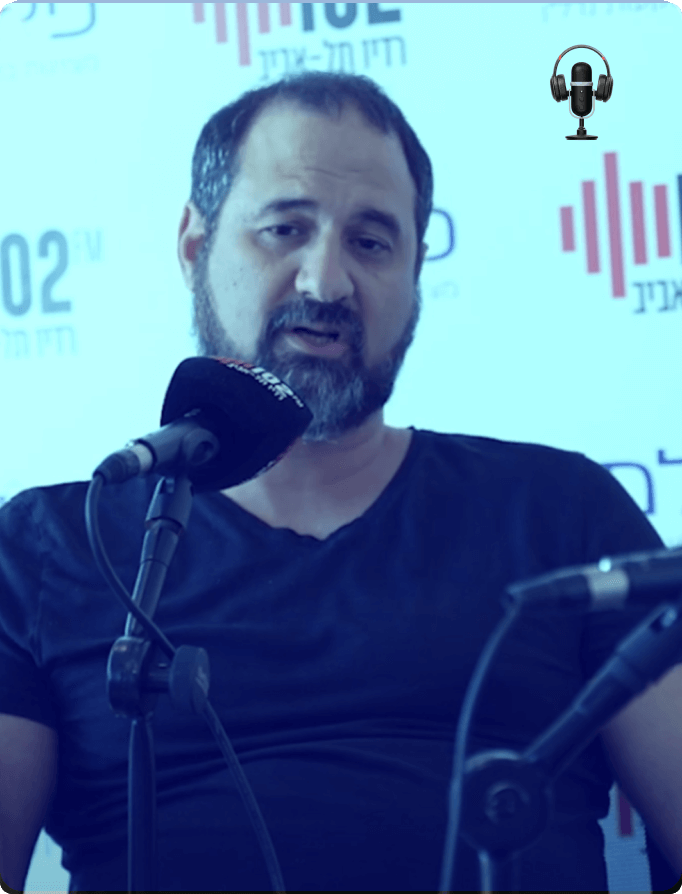
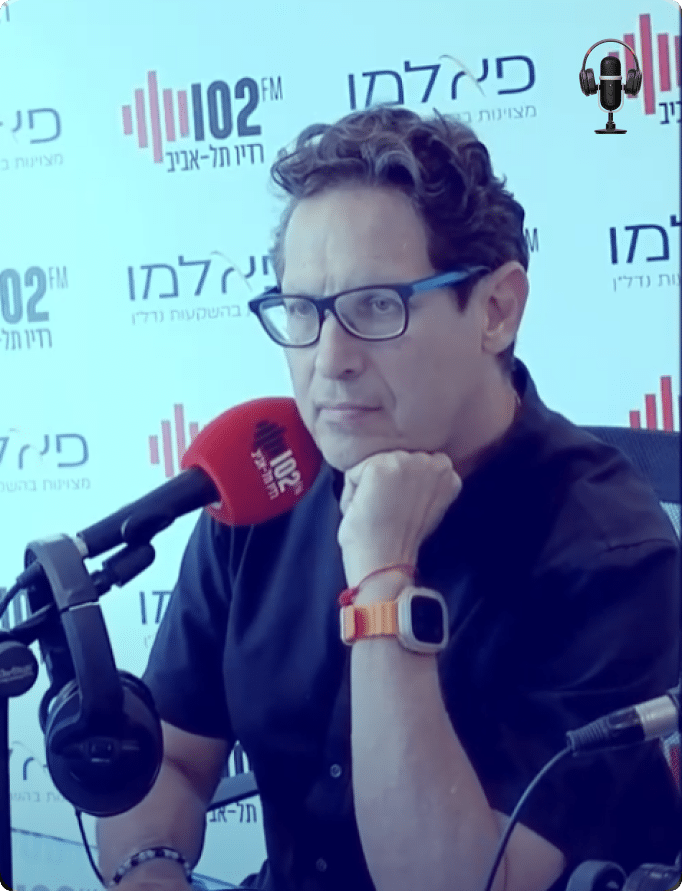
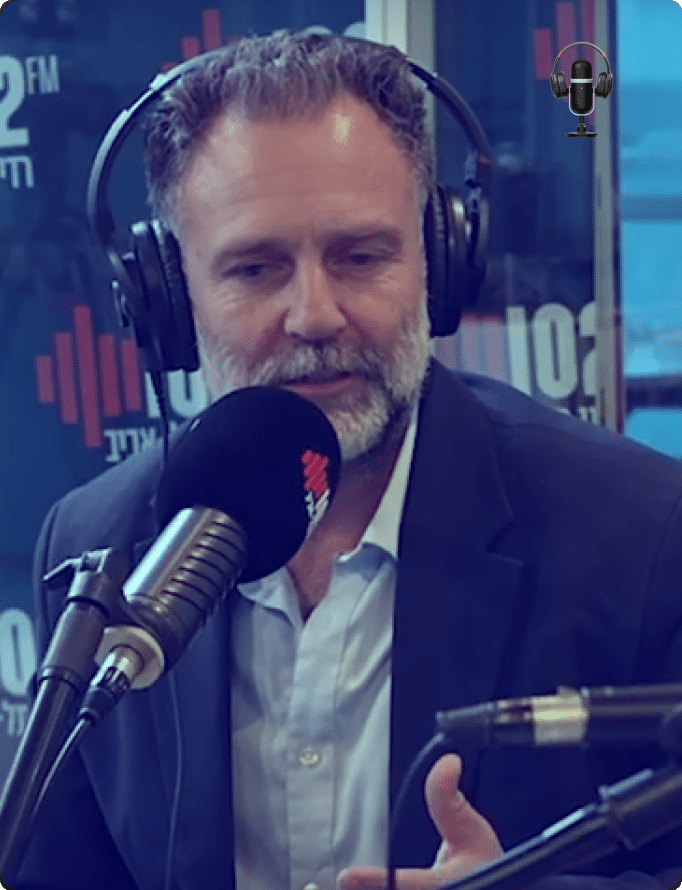
In the latest episode of “Building Far,” the radio show hosted by Merav Miller and Aviv Cohen, veteran real estate journalist Ofer Petersburg was a guest. Petersburg spoke about the media’s need to make real estate accessible to the public, the investigative reports he is most proud of, and the real estate market in Israel and abroad.
In the latest episode of the “Building Far” podcast, hosts Aviv Cohen and Merav Miller welcomed Ofer Petersburg, who has been a real estate editor, reporter, and commentator for the past 28 years. Petersburg began as a real estate reporter and editor at Yedioth Ahronoth, moving on to Israel Hayom, Walla, and The Jerusalem Post, and eventually hosting a real estate radio show. In addition to his journalistic work, he manages real estate communities on Facebook and WhatsApp.
What did he have to say about the role of the real estate media in Israel? And what does he believe are the non-negotiables when investing abroad?
"The purpose of communication is to connect"
Petersburg emphasizes that the purpose of communication is to connect. He believes in “constructive” communication, contrary to the common perception that good communication is only negative or critical. “Constructive communication isn’t sycophantic; it’s simply honest communication that can build,” he says. He notes that his investigations have sent ministers to prison and prompted police inquiries, “but the important thing is to understand that someone built this country.” According to him, there is a negative perception of contractors and entrepreneurs, who have gone from being a regulated professional designation (a licensed contractor) to the term “entrepreneur”—a label that, in practice, anyone with a little money can apply to themselves.
The Need to Make Real Estate Accessible to the Public
Petersburg sees his role as a real estate journalist as educating the public and making the field more accessible, which he describes as “a foreign language” to many. He emphasizes this particularly in the context of urban renewal and overseas investments, where the public needs education. Ordinary people, like a woman from Nahariya or Dimona, are making the most important decision of their lives—choosing who will manage their most valuable asset, the largest net transaction of their lives. According to him, there are entities that come along and promise dreams and “the moon and the stars,” without the ability to deliver. He notes, for example, how he decided to hold a conference with the ultra-Orthodox community to build connections, recognizing that they too need to be educated about the field. He criticizes the education system for failing to teach core subjects such as mortgages, real estate, economics, and pay stubs, “and as a result, people become captives of banks and experts, and are misled by real estate companies, purchasing groups, or overseas entities that promise distant dreams,” according to Petersburg. In his view, the role of real estate media is to teach the public the basic terminology of real estate and make it accessible.
Petersburg recalls how he entered the real estate field by chance, when the editor of Ma’ariv offered him the job. At the time, real estate was a field that was “the epitome of dryness—no one was interested in it, and it wasn’t covered in the newspapers,” he says. He made the subject more popular, starting with “Apartments for Sale” and expanding to include additional topics that have since become standard fare in real estate media. He sees himself as a journalist who looks for interesting stories and knows how to spot them.
Notable journalistic work and investigations
Petersburg refers to the investigations he has conducted over the years, including his exposé of “Operation Mango” in *Ma’ariv*, which involved sending real estate appraisers to the Golan Heights to assess homes ahead of their return to Syria—a move that caused an uproar in the country and even reached the U.S. government. Of the tens of thousands of articles he has written, he is particularly proud of bringing attention to the issue of “invisible workers” and workplace accidents in the construction industry, “a topic that previously interested almost no one,” he says. He entered the Knesset himself, burst into the Internal Affairs Committee, took control of the session, and arranged for a live broadcast to shine a spotlight on the issue. He also notes other exposés, such as the theft of children from a hospital and corruption investigations that led to a minister’s imprisonment. In his view, “the media’s role is to shine a spotlight and serve as a beacon,” and he is particularly proud of his work in the area of protecting human life.
The Israeli Real Estate Market and Apartment Prices
When asked the million-dollar question—whether to buy an apartment—Petersburg responds with the caution typical of a journalist. He notes that apartment prices have risen significantly over the past decade. He recalls prices that were considered “abnormal” in the past, such as an apartment in Givatayim for $140,000, or in Park Tzameret for 3 million shekels, which deterred people back then. He describes the “Israeli herd mentality” in the real estate market: when prices fall, no one buys because they think they’ll keep falling; when they rise, everyone rushes in frantically. He forecasts price drops of 15–20% for pre-owned apartments, as well as some declines for new apartments.
Petersburg explains that, in his opinion, “we’ve ruined the market by offering people ‘paper’ apartments, with a low down payment and the balance due later. Many people fell into this trap assuming that prices would rise, interest rates would fall, and they would profit.” He fears a situation similar to the subprime crisis in the future, in which those buyers will struggle to pay the millions of shekels remaining on their mortgages. According to him, the Bank of Israel’s quick action during the war and its interventions have, for now, saved the market from a steeper decline. Contractors now face a problem: they can offer incentives instead of direct price cuts, or acknowledge that prices are falling and offer a discount (currently around 5%). He believes an additional 5% discount is realistic, and that a total of 10% is achievable. However, Petersburg says that “a headline like ‘Prices Down 10%’ won’t appear easily, because everyone fears the snowball effect that would result.”
Overseas Real Estate Investments: Skepticism and Risks
Petersburg takes a very cautious approach to overseas real estate investments, such as investing in Greece , for example. He says that many parties who presented themselves as reliable turned out to be unable to deliver on their promises. He notes that part of the blame also lies with the buyers themselves, who get caught up in a “bubble.” He cites the example of the sale of a seaside apartment in Athens, when in reality it is a gas station and there is no sea in Athens.
A key point he raises is that when buying property abroad, such as when buying property in Greece, as well as in group purchases, need to understand that they are no longer “poor apartment buyers,” but rather “entrepreneurs.” “Every such purchase is a form of entrepreneurship, and therefore involves risk. This risk can lead to significant profit, but also to significant loss, and this must be taken into account,” he says. He views promises of high returns (12%, 15%, 20%) abroad as a “major disaster.” He has seen giant companies fail despite proper marketing, not necessarily because they were frauds, but because they themselves fell victim to a “bubble” or to their own promises.
Petersburg highlights the difficulty of acquiring a property portfolio remotely. Even if everything is ostensibly done within the law, if you are not a local resident and do not have the appropriate “joint venture,” it is difficult to find the right property. He explains that a local partner who knows the market, the local landscape, and the nuances will be able to identify whether a proposed property is truly a good opportunity.
In summary, Petersburg offers a seasoned and experienced journalistic perspective on the real estate market in Israel and around the world, emphasizing the need to educate the public, caution against false promises, and an understanding of the risks involved in investments that go beyond the standard purchase of a first home.
Wishes for the Future
When asked what he would wish for, Ofer replied, “First of all, to wake up every morning with a smile” and to continue doing “real estate journalism the right way.” He isn’t interested in entering another field at the moment, but rather in continuing what he does. He notes that there are always issues in real estate: money, stories, corruption, investigations—alongside the good things.