

Brief summary:
Short-term rentals in Greece can yield higher returns in tourist areas, but they are sensitive to seasonality and regulation. Long-term rentals offer stability and predictable cash flow. In many cases, a combination of the two models is an effective solution.
Real Estate Investments in Greece have become an attractive investment avenue for Israelis in recent years. Alongside the many opportunities, investors face a dilemma: Should they purchase a property for short-term tourist rentals, or opt for a long-term rental model? Each strategy has its own advantages, disadvantages, and a completely different operational and regulatory framework. What are the key considerations, return figures, expenses, and relevant regulations to keep in mind when making an informed choice? We’ve compiled the tools you need to make an informed decision.
Choosing an Investment Strategy: The First Step in Smart Real Estate Investing
Many Israelis who come to buy a home in Greece are drawn to the relatively low prices, the high potential for returns, and the sense of security that a tangible property in a European country provides. But just before making a purchase—it’s important to define your goals: Is the objective to generate a steady cash flow, build long-term value, or perhaps generate quick income through active management? The answer to this question will determine the choice of rental strategy.
Some investors want to combine real estate investment with personal vacations—for them, an Airbnb apartment in the Greek islands might be the ideal solution. Others are looking for peace of mind and a solid, long-term return—in which case, a long-term rental might be a better fit.
In addition, the property’s profile should be taken into account: ground-floor apartments in less sought-after areas are less suitable for short-term rentals, while apartments with a view of the Acropolis or proximity to tourist attractions may be a significant source of income during the summer months.
Greek Market Trends: Property Prices, Competition, and Changing Legislation
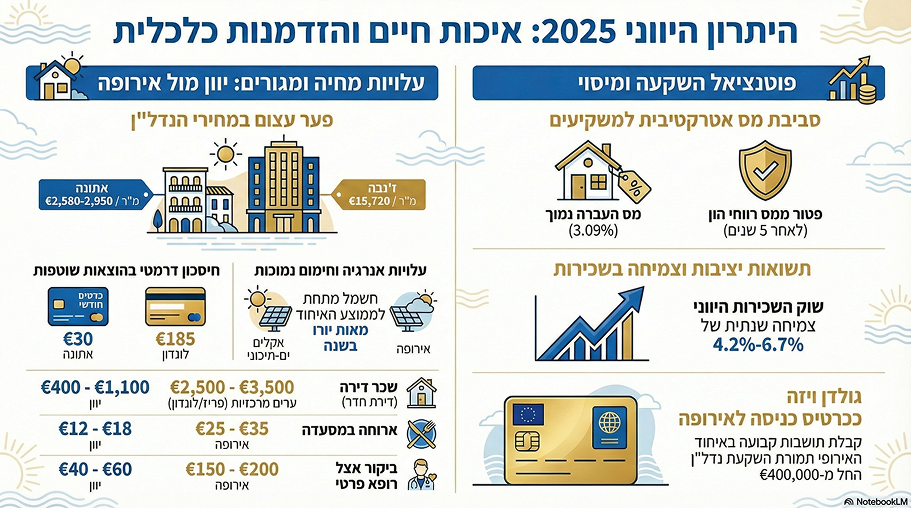
Starting in 2015, Greece experienced a surge in foreign investment, mainly thanks to programs such as the “Golden Visa” and low prices following the economic crisis. This trend accelerated the rise in apartment prices, particularly in Athens and the surrounding area. The forecast for 2025 is for a continued steady rise, particularly in areas popular with tourists.
However, alongside rising demand, regulations are tightening: the City of Athens is limiting the number of properties that can be listed for short-term rentals, and tax policies are frequently updated. Added to this is growing competition from other investors—many apartments are competing with one another on the same platforms.
The main advantage of long-term rentals is stability. The housing crisis in Athens and the shortage of long-term rental apartments have made this model attractive. Local tenants, students, returning residents, and international workers are looking for housing solutions—and are willing to commit to long-term leases, even at a higher price.
Return Potential: High Returns Versus Stable Income
Income from short-term rentals in Athens ranges from 8% to 12% per year—and sometimes even more during peak seasons. Properties with excellent locations, meticulous design, and smart management can yield over 10% net. However, the return is not consistent throughout the year and depends on demand, competition, and the apartment’s visibility on platforms like Airbnb.
In contrast, long-term rentals yield an average return of 4%–6%, with monthly stability and a clear cash flow forecast. Small apartments, particularly those located near educational institutions or employment areas, may even yield 7%–8%.
Professional recommendation:
For investors with limited equity and a desire for a steady return, a long-term model is preferable. Those who are able to invest in high-quality renovations and manage risks can achieve a higher return with a tourism-based model.
Seasonality: Peaks in Demand vs. Slow Periods
In Athens, the tourism market operates almost year-round, but about 70% of revenue is still concentrated in the 5–6 summer months. On the islands, the situation is even more pronounced: demand in the winter can drop by 50% or more.
Long-term rentals are not affected by seasonal fluctuations—high demand and a shortage of apartments in Athens ensure stability. However, it may take longer to find a tenant in the winter.
Professional recommendation:
The hybrid model (short in summer, long in winter) is particularly well-suited for apartments on the islands or in tourist areas of Athens.
Regulation and Taxation: What You Need to Know Before Buying
Tourist rentals require registration with the National Registry (AMAA), compliance with strict safety requirements, and, in some cases, restrictions on the number of rental days or properties. In Athens, for example, starting in January 2025, there will be a temporary ban on new tourist rentals in several central neighborhoods.
In addition, the tax brackets on income from tourist rentals in Greece are high: up to 45% at the top bracket. If you own more than three properties, you will be required to register a business and pay VAT.
For long-term rentals, the regulations are simpler: a formal lease agreement, reporting to the tax authority, and a progressive income tax rate (with a temporary exemption in certain cases through 2028). Tenant protection laws limit the ability to terminate a lease before its expiration, but they provide a high degree of stability.
Professional recommendation:
Investors who live in Israel or who do not want to keep up with changing regulations should opt for a long-term model.

Operating a tourist property is similar to running a business—you’ll need to respond quickly to guests, perform frequent maintenance, and provide high-quality service. This model also involves accelerated wear and tear, marketing costs, and the need for a unique design.
Professional recommendation:
If you are unable to hire a reliable management company in Greece, the long-term model will be a better fit for you.
Yield Optimization: Smart Tools for Maximizing Profit
Optimizing returns on vacation rentals in Greece requires dynamic price management, investment in design and complementary services, and a focus on digital marketing. In contrast, for long-term rentals, the emphasis is on targeted renovations, tenant screening, and signing stable, secure leases. Each approach requires a different strategy, but in both cases, proper planning and adaptation to local market demands are key to success.
Vacation Rentals
Dynamic Seasonal Pricing
- Short-term rentals in Greece, primarily through platforms such as Airbnb and Booking, are characterized by distinct seasonality: the tourist seasons (summer and holidays) bring high demand and allow for price increases, while during off-peak seasons, prices must be lowered to maintain high occupancy rates.
- Proper dynamic management involves continuously monitoring market prices, local events, and holidays, and adjusting prices accordingly. This allows you to maximize annual income and increase the potential return, which can reach 8–12% per year on in-demand properties.
Related Services: Transportation, Tour Packages, Meals
- Owners of vacation rentals who offer complementary services such as airport transfers, breakfast, or tour packages create added value that sets their property apart and justifies a higher nightly rate.
- These services enhance the guest experience, increase satisfaction, and boost the likelihood of positive reviews, which leads to greater visibility on rental platforms and higher occupancy rates over time.
Captivating design and professional photography
- A modern, clean, and inviting interior design, combined with professional photography, is a critical tool for achieving high occupancy rates. Well-photographed apartments receive more clicks and bookings on digital platforms.
- Investing in the property’s design and branding (for example, an authentic Greek or modern style) increases its value in the eyes of tourists, may lead to higher rental rates, and provides a competitive advantage in a saturated market.
Another tip: Building a reputation for your vacation rentals through positive reviews increases occupancy rates and rental prices. For long-term rentals, a good tenant is worth their weight in gold—so invest time in finding and screening them.
Operating Expenses: How Much Does It Really Cost to Manage a Property?
A Comparison Between Long-Term Rentals and Vacation Rentals
Long-term rental
Selective renovation: bathroom, kitchen, air conditioning
- Targeted renovations—primarily in bathrooms, kitchens, and air conditioning systems—enhance the property’s value and make it possible to charge higher rent, attract high-quality tenants, and reduce vacancy periods.
- Renovation costs in Greece vary, but a basic renovation (painting, flooring) ranges from 250 to 450 euros per square meter, and a comprehensive renovation can reach 950 euros per square meter or more. Installing air conditioning is considered a significant upgrade, especially in the Greek climate.
Selecting high-quality tenants with a stable income
- A rigorous tenant screening process (including an interview, income verification, and reference checks) reduces the risk of nonpayment, accelerated wear and tear, or damage to the property.
- High-quality tenants tend to take good care of the property, pay on time, and stay for the long term, which ensures a stable income and peace of mind for the investor.
Signing Long-Term Contracts Index-Linked
-
- Long-term leases (sometimes for three years or more) indexed to the Consumer Price Index protect the property owner from erosion of rental income and provide financial stability.
- In Greece, the law grants tenants a lease term of at least three years, which provides certainty for investors. Indexation (if possible) or an annual rent adjustment mechanism are particularly important during periods of inflation.
Summary: You don't have to choose—you can combine them
The decision between short-term and long-term rentals doesn’t have to be black and white. Many experienced investors in Greece choose to combine the two models—for example, renting apartments to tourists from May through October and then subletting them to local tenants during the winter months. This combination maximizes income and minimizes risk.
Professional recommendation:
Consult a local real estate advisor to gain a thorough understanding of regulatory restrictions, assess demand by region, and tailor the model not only to the property—but also to you as investors.
Annual Revenue
Average Monthly Income
Estimated Annual Income
Average occupancy rate
Annual Operating Expenses
Estimated Net Return
Vacation Rentals vs. Long-Term Rentals
The information contained in this document is intended for general purposes only and does not constitute legal, regulatory, financial, or tax advice. The authors do not warrant that the information is accurate, complete, or up-to-date, and assume no liability whatsoever for reliance upon it. Before taking any action, it is recommended to consult with an attorney or a qualified professional advisor. Nothing herein constitutes an offer or recommendation to make any investment, and any action taken is solely at the reader’s own risk.