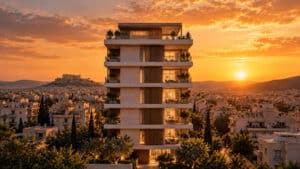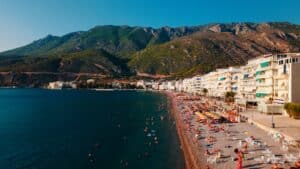

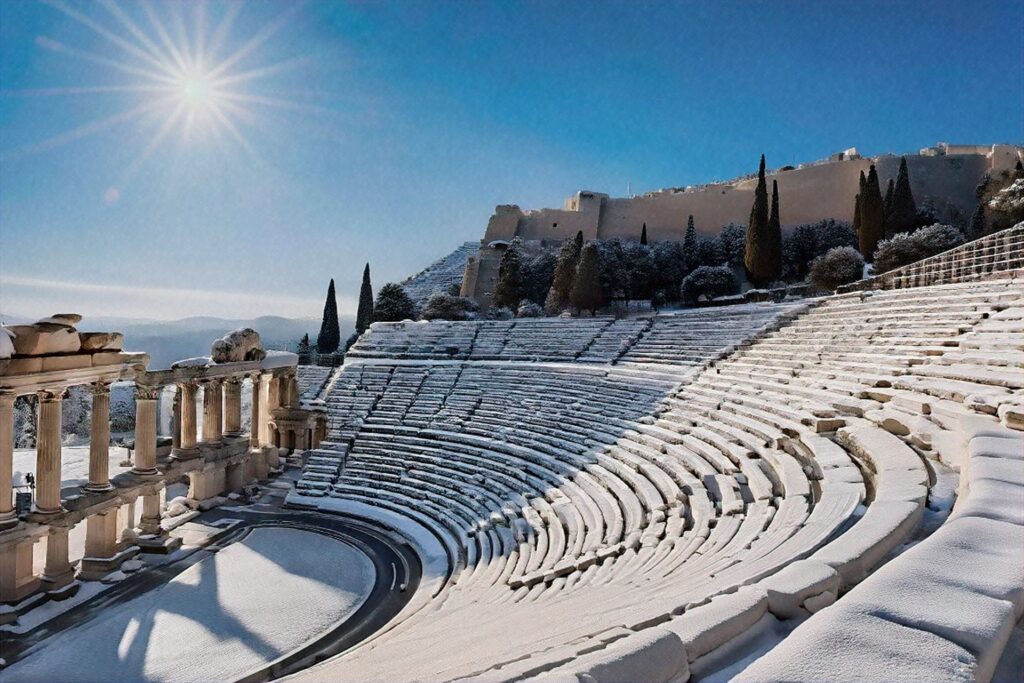
In the world of international real estate investment, weather can be a significant factor affecting returns. Studies from the past decade show that regions with mild winters and plenty of sunshine yield higher returns, longer rental periods, and significantly lower operating costs. For Israeli investors, who are familiar with the benefits of a Mediterranean climate, this insight is a natural advantage. When looking at the climate in Greece, a popular destination for real estate investment, there are unique nuances that are important to understand in depth.
Greece offers a clear competitive advantage over Northern European countries: While England, Germany, and Scandinavia are mired in long, cold, gray winters, Greece enjoys 250 to 300 days of sunshine a year, mild winters with average temperatures of 10–15 degrees, and the opportunity to enjoy the outdoors almost year-round. This difference doesn’t just attract tourists—it completely changes the economic potential of any property. So how does all this affect the real estate investment landscape in Greece?
European Inaction in the Face of the Greek Reality
When the average English person looks outside in December, they see the sun setting at 4:00 p.m., gray skies, and an average of only about 50 hours of sunshine throughout the month. England gets less than half the amount of sunshine compared to Greece. In Germany, the situation is similar: few sunny days and entire months with sub-zero temperatures. In Scandinavia, parts of the country experience a “dark season” during which the sun does not shine at all.
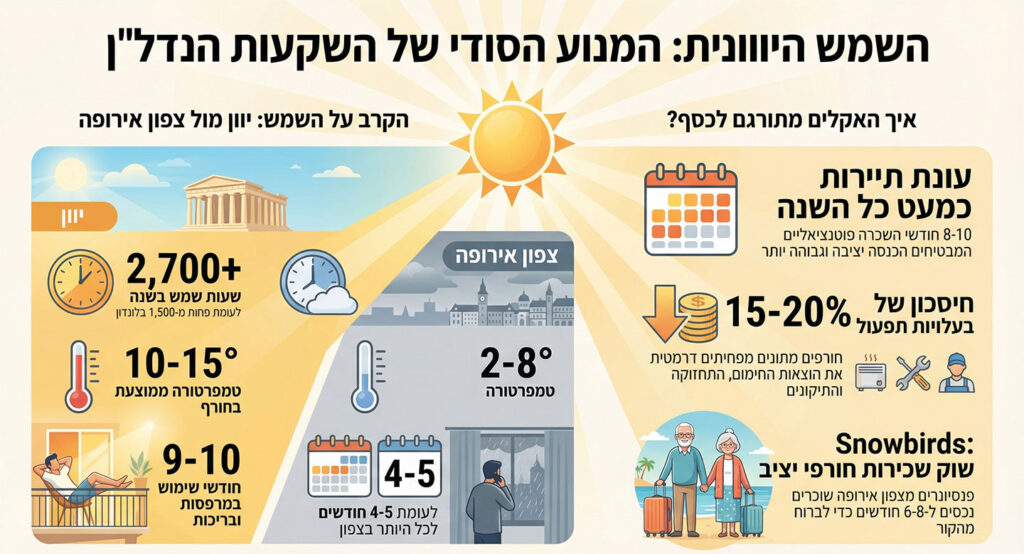
Athens and the southern coast of Greece, on the other hand, receive 2,700–2,900 hours of sunshine per year—nearly twice as much as London. The average winter temperature ranges from 10–15 degrees Celsius, compared to 2–8 degrees in Northern Europe. In terms of rainfall, Greece receives 400–600 mm per year (mostly during the short winter), while England gets 800–1,200 mm spread throughout the year, resulting in constant humidity and a deeper sense of cold.
The result is clear: in Greece, you can enjoy the beach, balconies, and private pools for 9–10 months a year, compared to 4–5 months at most in Northern Europe.
The "Snowbirds" Phenomenon: Retirees as an Economic Driver
Tens of thousands of British, German, and Scandinavian citizens have become a sort of “migratory birds”—in addition to living in their home countries, they spend 6–8 months a year in Greece in search of sunshine and a pleasant lifestyle. This phenomenon has several economic implications for investors:
- Stable winter rental market: High demand for 5- to 8-month leases at good rental rates.
- Vibrant communities of foreign residents: Tailored infrastructure and services (German-speaking doctors, British supermarkets) that increase property values.
- Growing Demand: Recent analyses rank Greece as the top retirement destination thanks to its combination of climate, low costs, and public health.
Recent data shows that 30% of British retirees are considering moving south because of the climate, and Greece tops their list of preferred destinations.
The Impact of Climate on Yield
- Length of the tourist season: In Greece, the tourist season lasts 8–10 months, compared to 4–5 months elsewhere in Europe. This means the potential for a steady, stable, and high income.
- Operating Costs: Mild winters dramatically reduce heating, maintenance, and repair costs. Studies show a 15–20% improvement in net returns compared to similar properties in colder states.
- Demand from retirees: A pleasant climate increases demand for permanent or winter homes, which has driven price increases of 10–15% in popular coastal areas such as Corfu and Halkidiki in recent years.
Climate Resilience: In the era of global warming, regions with stable climates are viewed as safer investments, with lower insurance premiums.
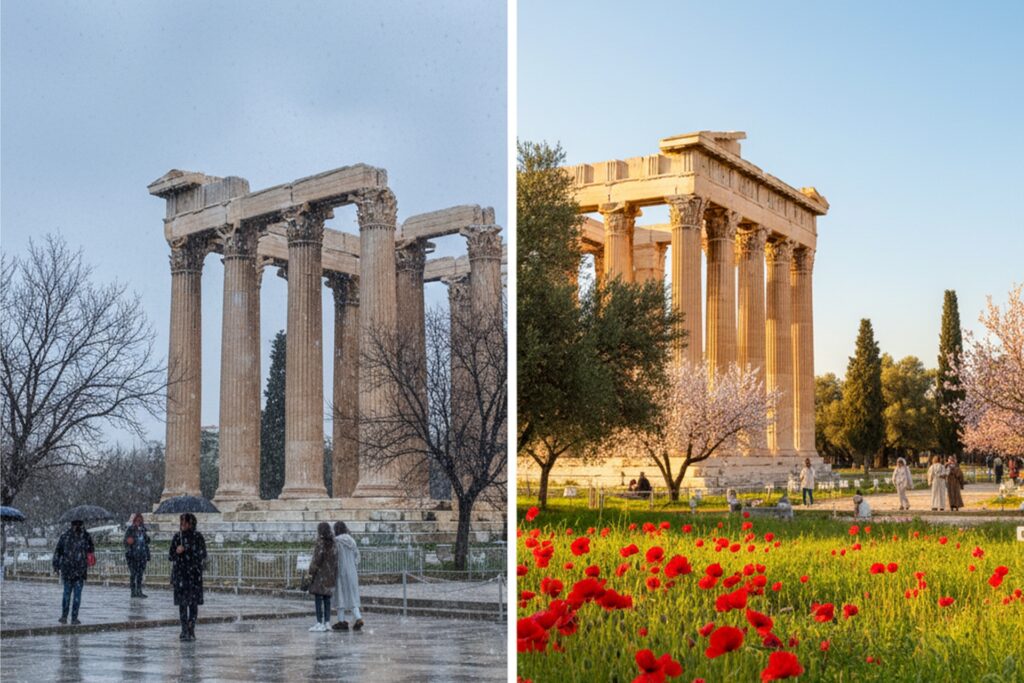
Map of the Greek Climate: Geographical Differences You Should Know
Southern Greece and the Islands (Athens, Crete, Rhodes, the Cyclades): A classic Mediterranean climate with over 3,000 hours of sunshine, short, mild winters (8–15°C), and hot but bearable summers by the sea. Ideal for sun-seeking tourists, short-term rentals, and adults looking for a “complete escape” from winter.
Northern Greece (Thessaloniki, Chalkidiki, Pelion): The region is cooler in winter (5–12°C, more rain), but summers are pleasant without extreme heat waves. This appeals to European tourists who prefer mild weather. It’s ideal for retirees who want to experience “real” four seasons, but still with much more sunshine than in their home countries. Thessaloniki, for example, offers 260 days of sunshine—still significantly more than in Northern Europe.
Mountainous regions (Epirus, Pindus Mountains): A cool microclimate year-round, with snow in winter. Suitable for those seeking a unique niche, but with a higher risk of flooding and limited accessibility in winter.
A Practical Guide: How to Choose a Property Based on Climate
For southern coastal areas/islands:
- Look for properties with southern exposure to maximize sunlight
- Large balconies, pools, and direct access to the sea
- Focus on a design that makes the most of natural light and features an open view to the outside
- Ideal for investors looking for short-term rentals and retirees from Northern Europe
- Northern and mountainous regions:
- High-quality thermal insulation and double-pane windows to reduce heating costs
- Natural Airflow and Solar Systems for Cost Savings
- Suitable for investors looking for long-term rentals and lower entry prices
Consider the risks:
- Southern Regions and Islands – Higher risk of wildfires and heat waves. Choose elevated properties with a safety buffer from vegetation
- North – Risk of flooding during the rainy season. Ensure proper drainage and appropriate insurance coverage
- Coastal areas – potential rise in sea level. If possible, maintain a minimum elevation of 10 meters above sea level
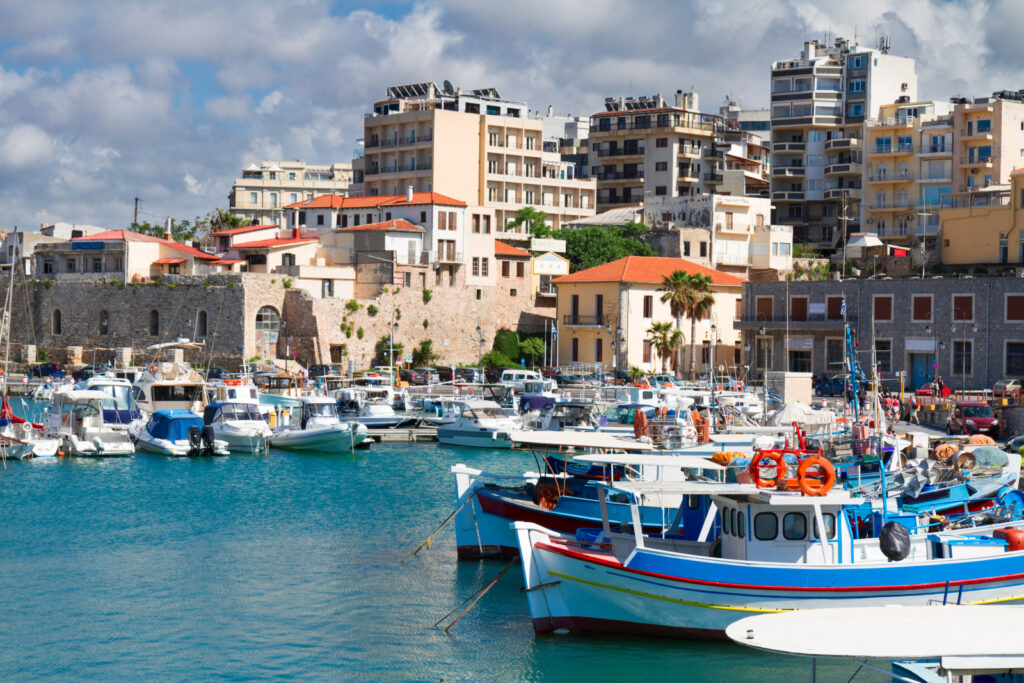
Recommendations for Israeli Investors
Visit in the winter as well: Don’t rely solely on a summer visit. Experiencing the property in January–February is crucial to understanding its true potential.
Check the infrastructure: In hot areas, air conditioning is a must. In cooler areas, the quality of the heating system is essential. On islands, make sure services are available even during the off-season.
Consider the microclimate: The property’s orientation (ideally southeast), elevation above sea level, proximity to the sea, and local vegetation—all of these factors affect comfort and costs.
Strategic diversification: Consider diversifying between a sunny area (for short-term rentals with high returns) and a milder area (for stable long-term rentals).
Summary: Climate as an Investment Lever
The Greek climate is not just “pleasant and sunny”—it is a key economic factor that influences property value, rental yields, operating costs, and market liquidity. The savvy investor understands that in a world where more and more people can work from anywhere, the quality of daily life is becoming a key investment criterion.
Greece, with 250–300 days of sunshine a year and mild winters, offers not only a “winter getaway” for European retirees—but also a data-driven investment opportunity for investors who know how to read the climate map correctly. The key is to match your choice of location and property to the type of demand you’re targeting, while having a deep understanding of regional nuances.
The information contained in this document is intended for general purposes only and does not constitute legal, regulatory, financial, or tax advice. The authors do not warrant that the information is accurate, complete, or up-to-date, and assume no liability whatsoever for reliance upon it. Before taking any action, it is recommended to consult with an attorney or a qualified professional advisor. Nothing herein constitutes an offer or recommendation to make any investment, and any action taken is solely at the reader’s own risk.