

Short answer:
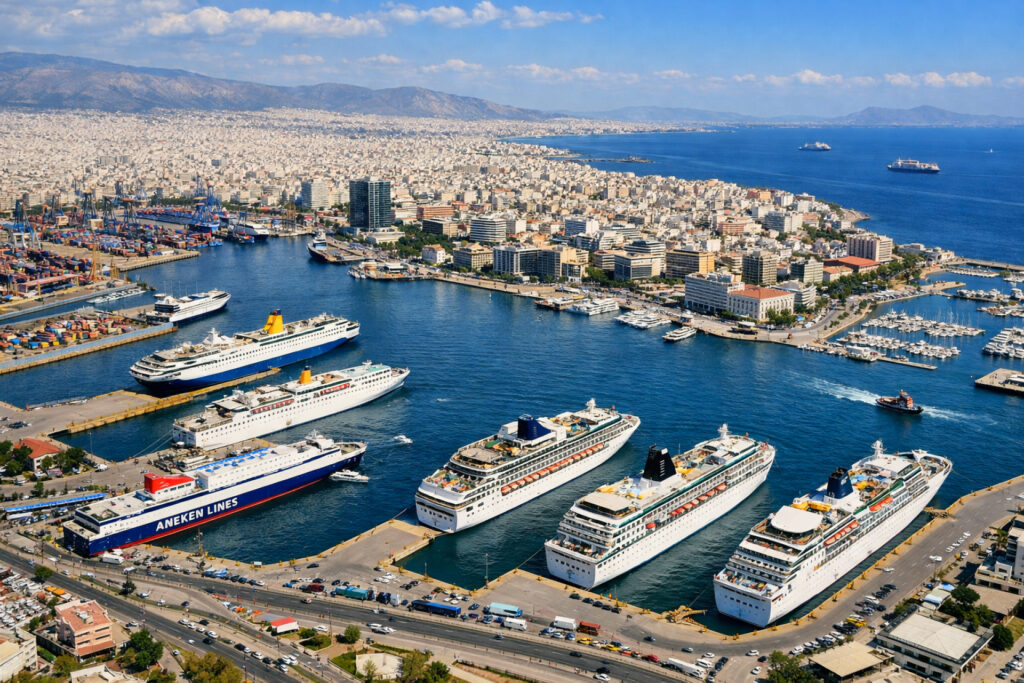
The development of the Port of Piraeus strengthens the region as a major logistics, tourism, and commercial hub. As the port attracts more activity, employment, and tourism, demand for housing, rental properties, and commercial space in the surrounding area increases.
The Chinese investment that transformed the Port of Piraeus into a tourism and logistics hub—and what does this mean for real estate investors?
Over the past decade, the Port of Piraeus has undergone a transformation that is reshaping the Greek real estate market and everything related toreal estate investment in Greece. What was once an old, neglected port has become one of the most advanced tourism and logistics hubs in the Mediterranean, and its impact is felt throughout the Athens metropolitan area. For an international or Israeli investor seeking an opportunity in a developing European market, Piraeus offers a rare combination of improving infrastructure, relatively high rental yields, and price momentum that continues to climb.
The driving force behind this dramatic change is COSCO—the Chinese shipping giant that has turned Piraeus into a sort of bridgehead for the “Belt and Road” initiative in Europe. The total investment of hundreds of millions of euros is already changing the game and has far-reaching implications for the local real estate market.
The Chinese are coming—and the money is pouring in
The deal, which began in 2008 as a concession for a single berth, expanded rapidly. In 2016, COSCO acquired a 51% stake in the Piraeus Port Authority for approximately €368.5 million and committed to investing an additional €760 million in upgrades and infrastructure. Since then, its stake has risen to 67%, and the port itself has grown from modest operations to become one of the six largest container ports in Europe—handling more than 4–5 million TEU (twenty-foot equivalent units) per year.
But Piraeus’s success isn’t limited to containers. The master plan includes luxury hotels, a shopping mall, upgrades to passenger terminals, and the expansion of commercial areas. Even an old wheat warehouse has been converted into a hotel, and a new entertainment district is in the works. This isn’t just infrastructure development—it’s a transformation of the entire city.
The results are already in: Piraeus Port Authority’s revenue reached a record high of approximately €194.6 million in 2022, a 26% increase year-over-year. Thousands of jobs were created in the region in the logistics, shipping services, commerce, and tourism sectors. However, this success comes at a price—studies identify a sense of exclusion among some local residents, who feel that the profits are not being distributed equitably.
How does this affect the real estate market? In a big way
The numbers speak for themselves. As of October 2025, the average asking price for residential properties in the Piraeus district stands at approximately €2,580 per square meter, compared to approximately €2,198 in December 2023. Between 2019 and 2024, Piraeus saw an impressive cumulative growth of 83.8% in real estate prices, the highest in the Athens region.
What is driving this surge? Primarily infrastructure upgrades, the expansion of the metro, and the development of the port itself. Every new subway line and every tourism project adds another layer of value to properties in the area. Rental yields stand at around 6–7% and even higher for commercial and tourism projects—compared to a lower average in other parts of Athens.
Where Should You Invest? A Guide for the Savvy Investor
Not all of Piraeus is the same when it comes to real estate.
Here’s the real picture:
Castella-Pasalimani: The most sought-after coastal area, with marina views and prices of around €2,928 per square meter. This is the place for premium and vacation apartments, and despite the high prices—it’s still relatively affordable compared to the Athenian Riviera. The target audience? International, high-end, and willing to pay.
City Center (Piraeus Center) : The beating heart of the city. The highest rent in the city—over €11 per square meter per month—thanks to its proximity to the metro, train, and port. Suitable for small offices and apartments for logistics workers, or for short-term business rentals. The downside? Noise, congestion, and direct dependence on port activity.
Klipolis-Priatida: A coastal neighborhood experiencing rapid growth. Developers are explicitly talking about a “significant rise in prices.” This is the place for small-to-medium-sized apartments for young families and investors who want to catch the wave before it peaks.
Tavria-Agia Sofia: Rents are low in the city, but that is precisely where the potential lies. Long-term investors can purchase at a low price, renovate, and rent to port and logistics workers. A classic value-add strategy.
Camínia-Playa Cucinha: The lowest price range in the area—about €2,100 per square meter. The surroundings are less attractive, but if the port development continues to expand, these neighborhoods could experience a significant spillover effect in terms of appreciation. Not for short-term investors, but definitely for those seeking high appreciation potential.

A Groundbreaking Project: Piraeus Gate
One of the most exciting projects is Piraeus Gate—an urban renewal initiative that is transforming an abandoned industrial zone into a mixed-use neighborhood spanning 85,000–105,000 square meters. The project includes 631 residential apartments, 268 serviced apartments for students and nomads, offices, commercial spaces, and 5,000 square meters of green space.
What makes this project unique? It combines the preservation of historic buildings (the AZEL factory and the old textile mills) with advanced environmental monitoring technologies. The goal: to become the first neighborhood in Greece to earn LEED Neighborhood certification. Total investment? Over €150 million, with completion expected in the second quarter of 2030. The project is already driving a 28%–42% surge in real estate prices in Piraeus in 2024–2025, with an annual increase of 4–6% projected through 2029. Prices start at €248,000 per apartment—an opportunity for early purchase at relatively low prices, with significant appreciation potential. In answer to the question whether it is worth buying an apartment in Greece —in Piraeus, you can find the balance between an attractive present and future potential.
Forecasts and Risks
Market analyses indicate that apartment prices will continue to rise, though at a slower pace than in recent years, stabilizing at a moderate and consistent rate of growth. In Piraeus, annual appreciation of at least 5% is expected in the coming years, driven by ongoing port and tourism projects. Tourism demand, along with the Golden Visa program for foreign investors, continues to bolster the market—particularly in coastal and port areas.
However, we must be realistic about the risks. The market depends on the resilience of international trade and port operations. European regulations regarding Chinese investments in strategic areas could impact further expansion. And, of course, there is a political and social risk: the public debate over foreign control of strategic infrastructure and the sense of exclusion felt by some residents will not disappear so easily.
Ultimately, Piraeus represents an exciting opportunity for investors looking for a growth market in Europe with real potential. The key? Know your way around, understand the local dynamics, and don’t be afraid to take a calculated risk. Because when a port grows, the city grows with it—and those who get in early come out on top.
The information contained in this document is intended for general purposes only and does not constitute legal, regulatory, financial, or tax advice. The authors do not warrant that the information is accurate, complete, or up-to-date, and assume no liability whatsoever for reliance upon it. Before taking any action, it is recommended to consult with an attorney or a qualified professional advisor. Nothing herein constitutes an offer or recommendation to make any investment, and any action taken is solely at the reader’s own risk.