

The Athens real estate market in 2026 stands at a fascinating crossroads between heritage preservation and the momentum of modern construction. While the restoration of historic buildings offers a unique character and a discounted entry ticket to the “Golden Visa” program, the new projects on the Riviera promise a futuristic standard of living and uncompromising energy efficiency. This article analyzes the pros and cons of each path: from maintenance costs and strict regulations on heritage buildings to the potential for appreciation in mega-projects. This will help you determine whether your strategy should focus on the charm of the past or the comfort of tomorrow.
The Athens real estate market presents investors with a fascinating strategic choice: should they invest in restored historic buildings with charm and character, or opt for new construction projects that offer modern comfort and energy efficiency? Each option has its own pros and cons, and the right choice in real estate investments in Greece depends on the investor’s profile, goals, and preferences.
The central conflict: charm versus comfort
- Historic buildings offer the “Athens spirit”—think thick stone walls, ornate cornices, and mosaic floors. In neighborhoods like Plaka or Psiri, you’re not just buying an apartment; you’re buying a piece of history that can’t be replicated.
New construction focuses on lifestyle functionality. Most new buildings in the southern suburbs come with underground parking (a huge luxury in Athens), spacious balconies, and elevators.
- Maintenance and Energy Efficiency
The "Old" Challenge: Even if you renovate your unit, the building’s common areas—the pipes, the facade, and the roof—remain old. Energy costs are significantly higher due to poor insulation unless you invest in expensive double-glazing and external thermal envelopes.
The "new" advantage: By 2026, new buildings are required to be nearly zero-emission buildings (ZEB). They feature heat pumps, solar panels, and superior insulation, which means electricity bills are up to 70% lower than in an unrenovated historic building.
- Regulation and Bureaucracy
Listed Buildings (Διατηρητέα): If a property in Greece is a “listed building,” every tile and window frame must comply with strict archaeological and architectural standards. Renovations often require approval from the Ministry of Culture, which can delay projects by 12 to 24 months.
New Construction: While the permitting process can still be slow, it is standard. You’ll be dealing with modern building codes and clear zoning regulations, especially in the new “Smart City” areas.
Case studies from the field
Historical Restoration: A Neoclassical Mansion in Plaka
Investors purchased a 19th-century mansion for €1.2 million and invested an additional €800,000 in an 18-month renovation. The building was converted into a boutique hotel and is currently valued at €3.5 million, with annual revenue of €600,000. This case illustrates the premium returns from tourism, but also highlights the high costs and regulatory barriers.
New Construction: The Ellinikon Project
Europe’s largest urban renewal project, located on the southern coast of Athens, is estimated to cost €8 billion and will include luxury residential units and create 75,000 jobs. The project is attracting institutional investors with its energy-efficient homes and expected positive impact on GDP, although risks such as delays remain.
Conclusions
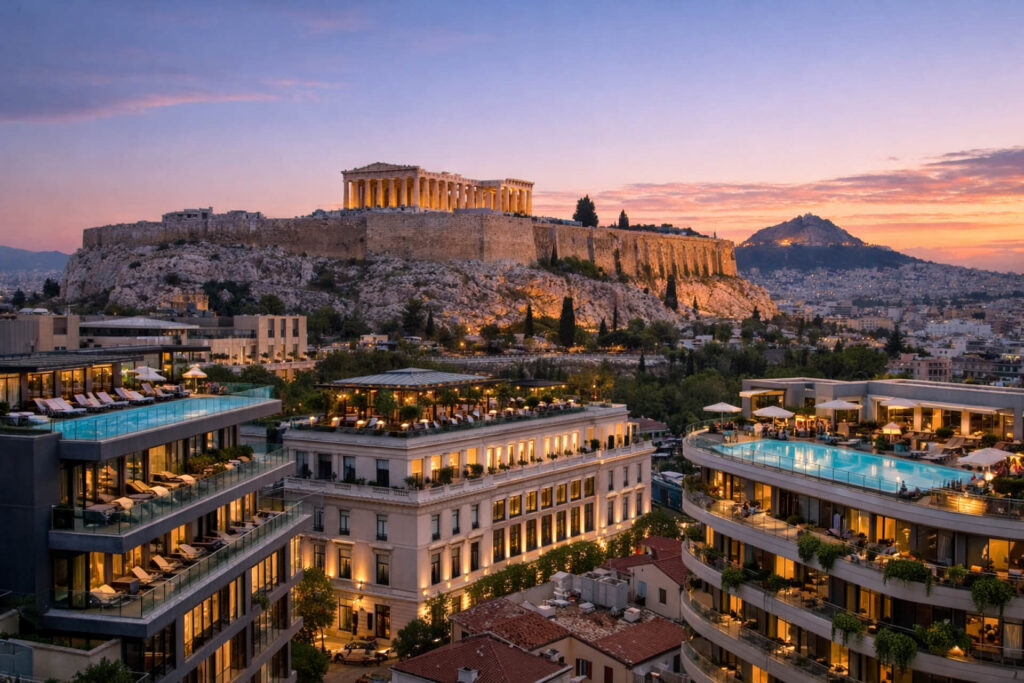
The charm of Athens lies in its layers of history. Investing in a historic building is an act of preservation and a bet on the enduring value of authenticity. Investing in new construction is a bet on the city’s modern future and global standards.
The optimal choice isn’t about what’s objectively better, but rather what aligns with your resources, schedule, risk profile, and personal investment vision.
Choose historic buildings if you have a high risk tolerance, patience, a passion for heritage, and a focus on a high-end niche market where uniqueness justifies a premium. Profits are generated through acquisition and restoration, not just market movements.
Choose new construction if you prefer capital preservation, predictable cash flow, modern efficiency, and a straightforward investment process. Profit is built into the development model and is realized through reliable rental yields or sale to a buyer seeking convenience.