

Short answer:
Tourism in Greece is boosting the real estate market in urban and tourist areas where there is demand for vacation rentals and short-term leases. As visitor numbers rise, so does the potential for occupancy, monthly income, and appreciation in value.
Greece’s thriving tourism industry is reshaping the local real estate market by influencing property prices, the short-term rental market, and the development of tourist areas. How does tourism affect apartment prices? Is it worth investing in a rental property? And what does the future hold for the Greek real estate market?
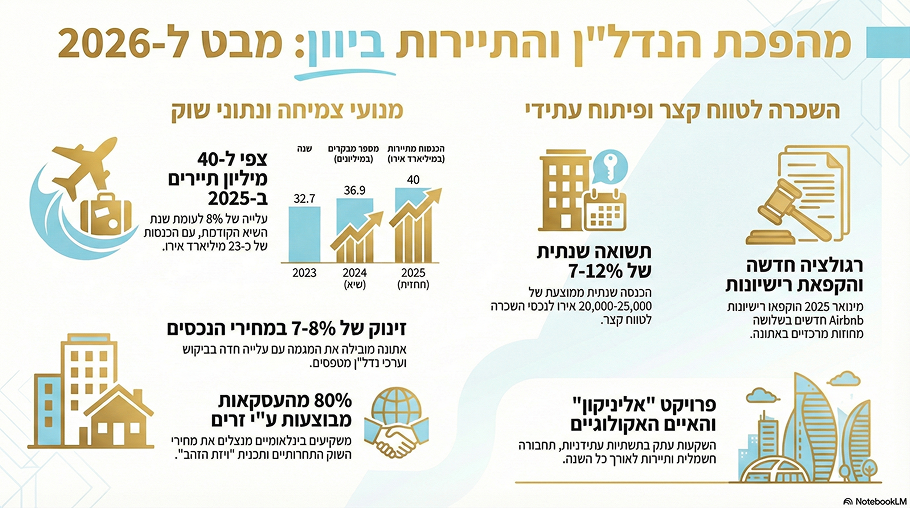
The Greek tourism industry continues to thrive, reaching new heights, with preliminary forecasts for 2025 projecting approximately 40 million visitors—an increase of about 8% compared to the 2024 record of 36.9 million—surpassing the 32.7 million recorded in 2023. Approximately 9 million tourists are expected to visit Athens alone in 2025, with these impressive figures translating to revenues of approximately €22.5–23 billion (an increase of approximately 10–12% from the 2024 peak of €20.5 billion), with the European Union continuing to lead with approximately 23–24 million tourists (about 60% of all visitors). At the same time, there has been a significant surge in revenue from American tourists.
This resounding success received international recognition a few years ago when Greece was named “Europe’s Leading Destination” at the 2021 World Travel Awards, a significant achievement against major competitors such as Italy, Spain, and Portugal. The outlook for 2026 remains optimistic, with the positive trend in the industry expected to continue.
Tourism in Greece is reshaping the country’s real estate investment market, as reflected in three key aspects: rising property prices in popular tourist areas, accelerated growth in the short-term rental market due to rising hotel rates and the boom in apartment rental platforms, and accelerated infrastructure development in tourist areas—as seen in western Athens neighborhoods like Glyfada, which have become sought-after premium areas. These trends reflect the profound impact of tourism on the Greek real estate market, as both local and foreign investors recognize the economic potential inherent in this phenomenon.
Beyond tourism’s direct impact on the Greek real estate market, there are also significant shaping the sector. Greece’s “Golden Visa” program attracts international investors seeking opportunities in a market where prices are still considered competitive relative to other major European cities. This combination of foreign investment and attractive prices points to significant growth potential in the Greek real estate market, which has not yet reached its full potential.
The Impact of Tourism on Property Prices in Greece
The Greek real estate market continues to show impressive growth, with the resurgent tourism sector serving as a key driver of growth in the industry. Data for 2025 indicates a continued rise in property prices, particularly in major cities and tourist areas, with a 7–8% jump over the calendar year. Athens is leading the trend with a sharp 6–8% increase in prices, a record that places it high on the list of price increases in Europe.
The growing demand for properties in tourist areas, particularly on the Greek islands and along the coast, reflects the profound impact of the tourism industry on the real estate market. A record number of tourist arrivals in 2024 led to a significant increase in property values, with over 80% of real estate transactions in the past year carried out by foreign investors.
The attractive returns in the short-term rental market—which stand at 5–6% in popular tourist areas—are drawing more investors to the Greek property market. Platforms like Airbnb are contributing to the growing demand, while accelerated infrastructure development in these areas is further increasing property values. Over the past five years, there has been a consistent annual increase of 5–7% in real estate prices in areas popular with tourists.
Despite the significant increases, real estate prices in Greece are still considered competitive compared to other European countries, suggesting further potential for future appreciation. Continued growth in the tourism industry, coupled with ongoing infrastructure development, is expected to support the positive trend in the Greek real estate market.
Demand for Short-Term Rentals in Tourist Areas in Greece – Significant Trends and Changes
The short-term rental market in Greece has experienced unprecedented growth in recent years, with platforms such as Airbnb and Vrbo becoming a major force in the local tourism market.
According to some estimates, the average daily rate for a short-term rental apartment last year was approximately €75. The average annual income from short-term rentals ranges from €20,000 to €25,000, while the annual return on investment in short-term rental properties is 7–12%.
In Athens, neighborhoods such as Plaka, Monastiraki, Kolonaki, and Psiri have become hotspots for short-term rentals, thanks to their proximity to major tourist attractions. High occupancy rates throughout most of the year indicate massive demand, especially in popular tourist areas. During the summer and fall seasons, occupancy in short-term rental apartments exceeds 90%, compared to winter, when occupancy drops significantly, particularly on the islands and in areas outside Athens. In terms of price, the seasonal effect leads to a significant increase in daily rental rates during the tourist season (May–September), sometimes by tens of percent.
However, this success has also led to significant challenges. In response to market changes, the Greek government has taken dramatic measures: starting in January 2025, the issuance of new short-term rental licenses has been frozen in three key districts of Athens, where Airbnb listings already account for more than 5% of all properties. On tourist islands such as Mykonos and Santorini, a limit of 30 days of operation per year is even being considered.
The impact on the local real estate market has been dramatic, with prices rising by 5–7% annually over the past five years in tourist areas. Competition with traditional hotels has become a significant source of tension—in Athens alone, there are approximately 300 hotels with about 18,000 rooms, all facing increasing competition from short-term rentals.
Local residents are expressing growing concern about changes in the character of their neighborhoods, rising rent prices, and the strain on municipal infrastructure. In response, the government has tightened regulations: property owners are now required to register their apartments in the national registry and obtain a unique registration number (AMAA) as a condition for renting them out.
Despite the new restrictions, the outlook for the industry remains optimistic: with a projected continued increase in the number of tourists, demand for short-term rentals is expected to remain strong, especially in popular tourist areas. The main challenge will be finding the right balance between tourism growth and maintaining the quality of life for local residents.
Development of tourist areas and infrastructure
Greece is undergoing a veritable tourism revolution, with massive investments in infrastructure development and new tourist areas designed to make the country a leading destination in the Mediterranean. At the heart of the plan is the “Elinikon” project, a futuristic tourist city in which tens of billions of euros are being invested, with the aim of competing with the luxurious resorts of Turkey and Dubai.
The tourism revolution in Greece is not limited to the development of traditional infrastructure. The country is expanding its tourism offerings to new and unexpected sectors—hiking trails, ski resorts, and mountain tourism are making Greece an attractive destination even beyond the traditional tourist season. Generous funding from the European Union is enabling a massive upgrade of infrastructure, making tourism offerings more accessible throughout the year.
A particularly fascinating initiative is the “Eco-Islands” program in the Aegean Sea, which combines environmental innovation with tourism. The program includes a transition to renewable energy, the adoption of electric transportation, and digital innovation, with the aim of enhancing the visitor experience while reducing the environmental impact. At the same time, areas undergoing infrastructure upgrades—from road construction to improvements in public transportation and the building of new public facilities—are becoming more sought-after, which is reflected in rising property prices.
All of these efforts serve a single goal: to make Greece a leading tourist destination that attracts a wide range of visitors throughout the year, while upholding the principles of sustainability and innovation.