


Brief summary:
A property in Athens is ideal for those seeking steady year-round demand from local tenants, students, and tourists. A property on the islands is better suited to a seasonal vacation rental model, with high income potential in the summer but greater dependence on seasonal trends.
Greece, a country rich in history and breathtaking natural beauty, is a popular choice for people interested in a vacation home for personal use or for rental. The two standout options are the vibrant capital city of Athens and the tranquil Greek islands. Athens, a metropolis brimming with ancient wonders and modern amenities, offers a unique urban experience characterized primarily by high-rise apartment buildings. In contrast, the Greek islands, scattered across the Aegean and Ionian Seas, are world-renowned for their picturesque landscapes, rich culture, and tourist appeal, as well as for their vacation homes and villas. Key factors to consider when comparing property ownership in Athens versus the islands include climate, property characteristics, energy efficiency, rental market dynamics, and maintenance considerations. What are the considerations between purchasing a property in Athens and purchasing a property on the Greek islands in 2026?
Climate and Weather Patterns
A crucial factor to consider when investing in Greece is the climate and weather patterns of the property’s location. These factors significantly impact the property’s usability throughout the year, as well as the potential costs associated with heating and cooling.
Athens
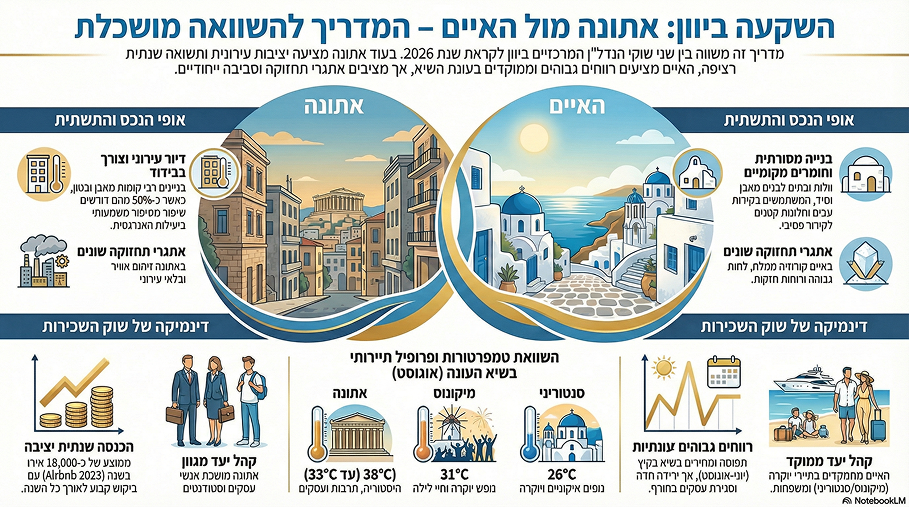
Athens has a Mediterranean climate: hot, dry summers and cold, rainy winters. During the summer months (June–August), high temperatures average 33°C and sometimes rise above 38°C. The skies are clear and sunny, ideal for outdoor activities, but require efficient cooling systems in buildings.
In winter (December–February), the weather is colder and rainier. High temperatures range from 13–15°C, while lows drop to 7–8°C. Rainfall peaks in December (about 80 mm), in contrast to the summer months (only about 6 mm).
Significant temperature fluctuations require robust heating and cooling systems, as well as adequate insulation to prevent moisture issues and water damage in the winter.
The Islands
The Greek islands enjoy milder winds than the mainland, which help alleviate the summer heat. However, winters on the islands are rainy and stormy, and many businesses close at the end of October.
On popular islands such as Mykonos (31° in August, 8° in January), Santorini (26° in August, 12°C in January), Rhodes (27°C in summer, 13°C in January), and Crete (26°C/11°C), there is a significant difference in precipitation between the rainy winter and the dry summer, which affects water management and property maintenance.
In addition, the islands are characterized by strong summer winds that provide natural cooling but also pose challenges for the properties and outdoor activities.
Property Types and Construction Considerations
The types of properties available, as well as the building materials and construction techniques commonly used, also vary between Athens and the Greek islands, reflecting their unique environments and histories.
Athens
Typical rental properties in Athens consist mainly of apartments and urban residences, a mix of older multi-story buildings and modern construction. Common building materials include stone, brick, and concrete in new projects, and mud brick on stone foundations in buildings dating from before the 1980s. About half of Athens’ residential stock lacks adequate thermal insulation, as modern insulation methods, improved roof and window insulation such as double glazing, have not been implemented to enhance energy efficiency. The prevalence of buildings with poor insulation raises concerns about energy efficiency, high energy consumption, and increased costs without significant renovation.
The Islands
The Greek islands offer a variety of rental properties: villas, traditional whitewashed houses, and apartments. The architecture on the islands makes use of local materials that contribute to a unique aesthetic and sustainability. Stone (particularly volcanic rock in Santorini) is a common building material that provides structural strength and thermal mass. Lime plaster, which creates iconic white facades, reflects sunlight and serves as a sealant and insulator. Wood, pottery, and ceramics are used for structural and decorative elements.
Traditional insulation includes thick stone walls that regulate temperature, flat roofs insulated with sand, and small windows to minimize heat gain in the summer. Alongside these traditional methods, modern demands for comfort and energy efficiency are leading to the adoption of advanced techniques such as external thermal insulation systems and insulated roofing panels to improve thermal performance and meet current standards.
Heating, Cooling, and Energy Efficiency
The methods used to heat and cool properties, as well as considerations regarding overall energy efficiency, vary between Athens and the Greek islands and are influenced by their respective climates and architectural styles.
Athens
In Athens, common heating systems include central diesel-fired boilers connected to radiators (despite the significant fuel costs), standalone gas boilers in areas with access to natural gas, air-to-air heat pumps (popular due to their ability to provide energy-efficient heating and cooling), electric heaters, and fireplaces (primarily in older buildings). For cooling, air conditioning is the primary method for coping with summer heat, alongside passive strategies such as natural ventilation and shading devices. Athens’ extreme climate results in high energy consumption for both winter heating and summer cooling, particularly in older, uninsulated buildings. The city has good solar potential, with an average solar radiation of approximately 8.19 kWh/day in the summer. The Greek government offers incentives for the installation of solar panels and energy storage systems in residential properties and encourages the transition to renewable energy and energy independence.
The Islands
In the Greek islands, heat pumps are a common solution for heating during mild winters and cooling during hot summers, alongside electric heaters and fireplaces as supplemental heating. While air conditioning is common for cooling, traditional architecture incorporates passive cooling principles: white lime that reflects solar radiation, thick walls that provide thermal mass, small windows that reduce heat gain, and designs that promote natural ventilation.
The island climate primarily requires cooling in the summer, with reduced heating needs during the mild winter. Energy efficiency has become an important consideration for property owners, both for environmental reasons and due to electricity costs. The islands enjoy excellent solar radiation (sometimes exceeding that of Athens) and are working to increase the use of renewable energy, particularly solar, with the support of government initiatives and incentives for residential installations, which help reduce costs and environmental impact.
Seasonality in Tourism and the Rental Market
The tourism industry plays a vital role in Greece's economy and has a significant impact on both demand and apartment prices in Athens and the islands.
Athens
Athens enjoys a longer tourist season than the islands, with peak periods in the spring (April–June) and fall (September–October), and a slight decline during the hot summer months (July–August). Seasonality drives high demand for short-term rental properties, with rental prices peaking during peak seasons. Athens offers particularly attractive rental yields in central and tourist areas, with an average annual income of approximately €18,000 for apartments listed on Airbnb in 2023, indicating a strong short-term rental market. The city’s diverse tourism profile (historical sites, culture, city life), combined with business travelers and long-term renters, creates a stable rental market throughout the year compared to the islands, which are more dependent on seasonality.
The Islands
The Greek islands experience a distinct peak tourist season during the summer months (June–August), with high demand for accommodations and significantly higher prices in Mykonos and Santorini due to their global popularity. The winter months (November–March) see a significant decline in tourism, demand, and rental prices, while the shoulder seasons (May, September–October) still attract many visitors.
Mykonos and Santorini offer the highest income potential and returns in Greece, while Crete and Rhodes also provide strong rental yields in these popular destinations. The intense concentration of tourism in the summer creates a competitive market with high occupancy and prices, and property owners must plan for lower occupancy and income during the off-season. Mykonos and Santorini cater to the luxury market and attract high-spending tourists, while Crete and Rhodes appeal to a broader range of visitors, including families and culture and beach tourists.
Property Maintenance Considerations
Maintaining a vacation home in Greece presents unique challenges depending on the location, primarily due to the impact of the climate and the environment.
Athens
Property owners in Athens face maintenance challenges due to air pollution, which stains and damages building materials. Regular cleaning and protective coatings are required to mitigate this damage. Urban wear and tear, typical of densely populated cities, poses an additional challenge. Furthermore, the more frequent and intense heat waves caused by climate change place a strain on cooling systems and can damage building materials. Therefore, property owners need to budget for ongoing maintenance and repairs due to these urban and climatic factors.
The Islands
The Greek islands present unique maintenance challenges due to their coastal environment. Salt corrosion damages building materials, particularly metals, and requires durable materials and regular maintenance. High humidity promotes the growth of mold and mildew, necessitating good ventilation and dehumidification systems. Strong winds along the Aegean coast cause wear and tear on exterior structures such as pergolas and roofs, necessitating sturdy construction and periodic inspections. Additionally, seismic activity in the region requires compliance with special building codes and appropriate insurance to protect the investment.
Target audience for rental properties
Understanding the typical tenants who are drawn to properties in Athens and the Greek islands is essential for owners who want to maximize their rental income and tailor their properties accordingly.
Athens
Athens attracts a wide range of renters. Tourists are drawn to the city’s rich historical sites, cultural attractions, and vibrant city life. Business travelers also visit Athens due to its status as a major economic hub. The city has a significant population of long-term renters, including students attending its universities, foreign workers in various sectors, and local residents seeking a place to live. Smaller one- and two-bedroom apartments are particularly common in the Athens rental market, appealing to couples, solo travelers, and young professionals. There is also a growing market of digital nomads and foreign workers seeking long-term rental options in the city. The diversity of tenant types in Athens contributes to a more stable rental market with less extreme seasonal fluctuations compared to the islands.
The Greek Islands
The target audience for rental properties in the Greek islands is vacationers seeking a typical Greek holiday experience: beaches, vibrant nightlife (especially in Mykonos), iconic views (Santorini), cultural experiences and diverse landscapes (Crete), and historical sites combined with beaches (Rhodes). Mykonos and Santorini primarily attract luxury travelers seeking villas and exclusive experiences, while Crete and Rhodes also appeal to families and offer a variety of activities. Villas and traditional island homes are common rental options. Mykonos and Santorini are characterized by a high concentration of luxury properties for a wealthy clientele, whereas Crete also offers apartments and traditional homes and attracts a broader range of tourists. The strong summer season significantly influences the type of renters.
Conclusion – City Tourism vs. Beach Vacations
Choosing between apartments in Athens for investment and properties in the Ionian Islands involves weighing distinct pros and cons. Athens offers urban living, cultural richness, and more stable year-round rental income potential. Its climate features a wider temperature range, requiring powerful heating and cooling systems, and property maintenance needs must account for air pollution and urban wear and tear. The rental market in Athens caters to a diverse audience, including tourists, business travelers, and long-term residents.
In contrast, the Greek islands offer a more traditional vacation experience characterized by breathtaking natural beauty and strong seasonality. While rental income potential is high during the peak summer season, property owners must contend with significant drops in demand during the off-season. The climate, while offering refreshing summer breezes, also presents maintenance challenges related to salt corrosion, humidity, and strong winds. The rental market is primarily geared toward vacationers, with specific islands attracting different segments, ranging from luxury tourism to families.