


In recent years, Greece has become a favorite destination for real estate investments among Israelis.
Peleg Yariv, CEO and owner of Palmo, shares with us the reasons behind the growing interest, the benefits of investing in Greece, and how professional guidance helps achieve attractive returns.
Why Are Israelis Looking for Investment Opportunities Overseas?
Israelis are looking to invest in real estate abroad for several key reasons. First and foremost, the return on investment: In Athens, real estate prices are lower and maintenance costs are lower than in Israel, which allows them to earn more. In addition, the barrier to entry is significantly lower; for about one-tenth the price of an apartment in Tel Aviv, you can buy an entire property in Athens.
Beyond that, it’s a way to diversify your investment portfolio and reduce dependence on the local market, enjoy passive income in a foreign currency, and perhaps even profit from changes in exchange rates. With a wide range of properties and flexible short- and long-term options, real estate investments in Athens are an attractive and stable long-term solution.
What has prompted Israelis to take an interest in buying property in Athens in recent years?
Israelis’ main interest in real estate in Athens is primarily related to location. Greece is right around the corner—a short two-hour flight and you’re there. This gives you real control over your investment: you can come see the property yourself, meet with tenants, and handle things in person. When you compare this to investing in more distant locations, such as Portugal or London, the advantage becomes clear.
For families looking for a vacation home—even if only for part of the year—this is the ideal solution: the proximity allows for flexibility in planning vacations and visits to the property. I think it also provides a sense of security—you know you have a property in a nearby, accessible location that you can easily reach whenever you want, and that’s something that’s very important to Israeli investors.
Are there any advantages to investing in real estate in Athens compared to other popular investment destinations among Israelis?
If you’re considering Athens as a real estate investment destination, there are several advantages there that aren’t easily found elsewhere. First of all, due to the 2008 economic crisis, real estate prices in Athens are still significantly lower than in other countries. They remain about 15% lower than they were back then, while real estate prices in the rest of the world have surged by 50–80%. This is truly a window of opportunity—you can buy properties in a major capital city at relatively low prices, with clear potential for appreciation as the economy continues to recover.
Beyond that, taxation is also an important factor, and it’s one of the things that really attracts Israelis to Greece. The purchase tax in Greece is only 3.09%, and there’s a full exemption from capital gains tax for up to three apartments per person—rates that are much lower than those in other countries. Furthermore, thanks to the tax treaty with Greece, Israeli investors are subject to Greek tax law and do not have to pay double taxation on income from real estate investments. And there’s an added bonus—you can register any property in a family member’s name to reduce your tax liability.
And let’s not forget tourism. Athens is a tourism powerhouse, attracting over 8 million tourists a year. This figure creates steady demand for short-term rental properties, especially in tourist areas, offering high yield potential of approximately 7–10% per year. Bottom line: Athens offers rare opportunities to combine affordable prices, favorable tax treatment, and promising returns. To me, Athens reminds me of Tel Aviv in the 1990s, both in terms of prices and appearance; after all, it doesn’t make sense that in a major capital city with over 8 million tourists a year, the price per square meter would be lower than prices in Israel’s periphery.

What legal considerations should be taken into account before purchasing property in Greece?
It’s a good idea to start by verifying that the property is properly registered and that there are no liens or debts on it; even if there are, these issues can be “resolved” with the help of an experienced legal team. Check that the property complies with planning and building regulations and that there are no violations (which can also be resolved with the help of an experienced legal team). Also pay attention to taxes—such as purchase tax and local taxes. In the sales contract, make sure there are full details regarding the property, the price, and the payment terms. It’s important to verify that all necessary permits for use or rental are in place, to inspect the physical condition of the property, and to review the rights of neighboring property owners. If you plan to live there, check immigration laws. And again, don’t forget to consult with a local attorney who can guide you through the process.
What are the main investment financing options available to foreign investors?
Real estate investments in Greece by foreign investors are primarily financed by the buyer, who is required to provide 100% of the funds from their own capital due to restrictions in the local mortgage market. Following the economic crisis, Greek banks significantly restricted access to mortgages. Although there has been some increase in the availability of loans since the economic recovery began, the terms remain unfavorable, and as of now, the ability of foreign investors to obtain a mortgage is limited to the point of being virtually impossible. In addition, interest rate hikes in the Eurozone have had a negative impact—mortgage interest rates in Greece rose to 4.29% in 2023, compared to 2.87% two years earlier. Currently, about 80% of all real estate purchases are financed with cash, and only about 20% with mortgages. Therefore, anyone seeking financing for an investment in Greece today should plan ahead and rely primarily on their own capital.
What economic trends in Greece are currently affecting the local real estate market?
Greece continues to grow economically, with forecasts of 2.2% growth in 2024 and unemployment falling below 10%. This is creating a surge in demand for real estate, especially in Athens, Thessaloniki, and popular islands such as Santorini and Mykonos. Programs such as the “Golden Visa,” which offers a residence permit to those who invest in real estate, are also attracting many investors from around the world. On the other hand, construction costs are rising due to inflation, and high interest rates are making bank financing difficult. It is precisely these factors that present opportunities for investors with their own capital. If you look at sought-after areas or large-scale projects against the backdrop of infrastructure development in Athens, now is an interesting time to invest there.
What are the main financial risks involved in investing in real estate in Greece? And how can they be mitigated?
When investing in real estate in Greece, as with other real estate markets, there are several risks to consider. For example, fluctuations in interest rates can affect returns, inflation may erode the value of the investment, and currency fluctuations between the shekel and the euro can also pose a challenge. In addition, there are local market risks—such as changes in demand—and liquidity risks, should it prove difficult to sell or rent the property.
To address this, it’s important to thoroughly inspect the property—both physically and legally—analyze the market and economic trends, and plan a budget that includes contingencies. It’s also advisable to diversify your investments, consult with experts, consider currency hedging, and obtain appropriate insurance. Regularly monitoring the property and the local market is also critical.
Why is everyone flocking to Athens?
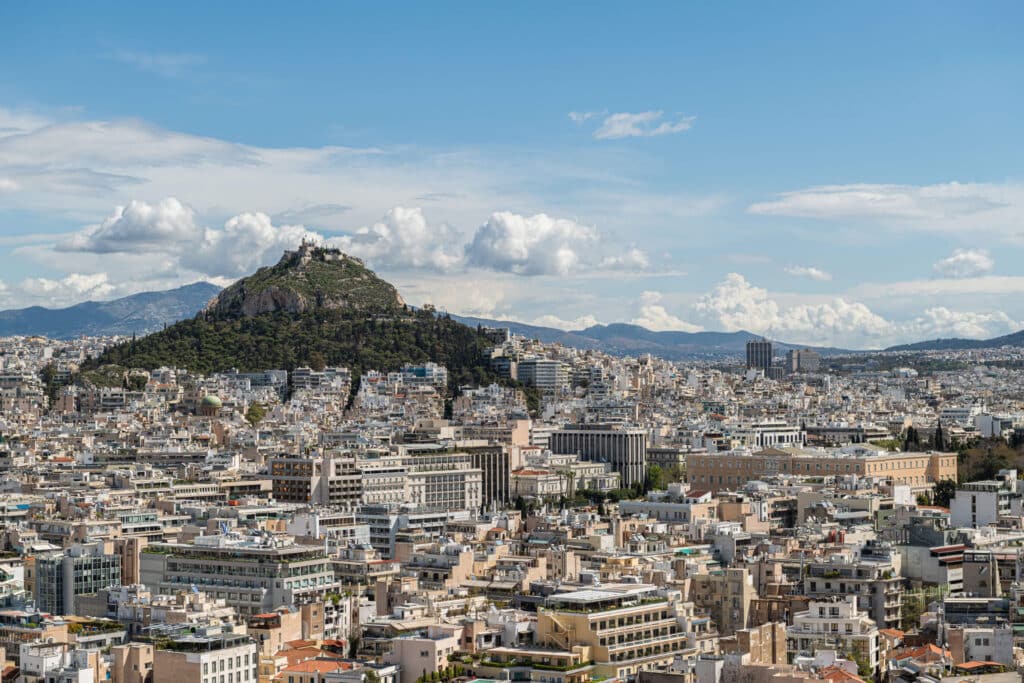
Athens is a leading destination for real estate investment thanks to several clear advantages. First and foremost, its popularity as a tourist destination: more than eight million tourists visit the city each year, which boosts demand for vacation rentals. With a potential return of about 7–10% on vacation rentals, it’s clear why this is a profitable venture. In addition, more than 250,000 students attend the city’s 13 universities, creating constant demand for small, affordable apartments.
Athens is not only a city with an incredible cultural heritage, such as the Acropolis, but also the financial and business center of Greece, with approximately 5 million residents in the metropolitan area—accounting for 40% of the country’s population. The growth in housing demand is expected to continue, particularly for new apartments.
How can proper, professional guidance help investors in Greece?
Professional guidance can really make a difference when investing in Greece. Local experts know the market well, which allows them to find the best opportunities. They guide you through the entire purchase process. In addition, they conduct thorough due diligence on properties to ensure there are no legal or financial issues. If the property requires renovation, they can also recommend improvements that will increase its value. Beyond that, it’s important to understand that they assist with property management, finding tenants, and handling tax matters. They are always up to date on market trends and help negotiate with local sellers, taking cultural differences into account.
How do you bridge language and cultural barriers? How do you know if the other party is trustworthy?
To bridge language and cultural gaps and ensure that the other party is trustworthy, it’s a good idea to take a few steps. First, if you’re doing this on your own, it’s important to carefully select experienced professionals—such as a lawyer, real estate agent, architect, engineer, etc.—to guide you through the process. It’s also important to familiarize yourself with local customs and understand how to negotiate in Greece without jeopardizing the deal.
If you decide to go through an Israeli development company, make sure they have sufficient experience and a local team with a firm grasp of the ground situation—a skilled team, most of whom should be local, who are familiar with local laws and, above all, the local mindset. It’s always important to check the reputation of the broker or consulting firm, read reviews, and ensure that the agreement is clear and includes all details regarding services and costs. Don’t skip a thorough due diligence review of all documents, and ensure full transparency regarding the investment’s business model. And ultimately, if something feels off—don’t ignore your gut feeling.
How can you ensure you maximize your return on investment?
To maximize your return on investment in Greek real estate, there are a few things that can help. First and foremost, it’s important to choose a property in a strategic location—for example, in popular tourist areas or those undergoing development. Additionally, it’s worth negotiating effectively to purchase the property at an attractive price. If possible, invest in smart renovations that will increase the property’s value and allow you to charge higher rent. It’s also important to manage the property efficiently, find high-quality tenants, and maintain it regularly. Don’t forget to check the tax regulations in Greece and take advantage of tax benefits, and also consider diversifying the property’s use—short-term rentals during the tourist season and long-term rentals as needed. It’s always a good idea to stay up to date on market trends, explore financial leverage options, and leverage connections with local professionals. Spreading your investment across multiple properties or regions helps reduce risk. Most importantly, remember that a long-term investment is usually the safer option. Additionally, keep in mind that returns consist not only of “income” (i.e., rental income) but also of capital appreciation (i.e., an increase in the property’s value); therefore, you need to be thoroughly familiar with the property’s location, future development plans, and so on.
What advantages do companies like Palmo offer Israeli investors?
The greatest advantage of working with Palmo is the peace of mind that comes with our local knowledge and experience. The Palmo team knows the Greek market inside and out—its trends, developing areas, and local procedures. This knowledge allows us to identify excellent investment opportunities and bridge language and cultural gaps. Palmo also ensures that properties are thoroughly vetted—including legal and financial aspects—and handles all the bureaucratic aspects of the purchase process. Furthermore, we are involved exclusively in urban renewal projects, based on the understanding that purchasing a single apartment in an old building with outdated infrastructure increases investment risk. Instead, we acquire entire buildings, replace all building infrastructure, renovate the apartments, refurbish them, and in every project, we provide added value such as: fitness centers, rooftop complexes, and study rooms—even if this comes at the expense of space that could be sold as apartments—based on the understanding that common areas significantly increase the property’s value, both when renting and when selling. We also offer property management services, including ongoing maintenance and tenant placement. We stay constantly updated on market trends, which allows us to identify new opportunities and increase the likelihood of a profitable investment.
Palmo focuses on the renovation and construction of new projects in Athens, primarily in strategic locations with excellent transportation access. The projects include long- and short-term apartments, some of which are located near tourist attractions and others near universities and other key landmarks. Some of the apartments meet the “Golden Visa” requirements for those interested in residency and offer a unique living experience with modern amenities.