


Short answer:
Real estate prices in Greece have begun to recover from the 2017 slump, driven by economic improvement, the return of foreign investors, and rising demand in Athens, Thessaloniki, and tourist areas. Following sharp declines, the market has entered a correction phase.
The year 2017, considered the “official turning point” for Greece’s recovery from the economic crisis that nearly led to its bankruptcy in 2008, marked the beginning of a rise in housing prices, both on the mainland and in the Greek islands. This represents a significant turnaround and a shift in trend, as a decade earlier housing prices in Greece had plummeted by more than 40%, particularly in major cities such as Athens and Thessaloniki. The price decline did not occur “in a vacuum” but was a consequence of an economy on the brink of economic collapse; Between 2007 and 2017, Greece’s GDP (gross domestic product) plummeted by 25%, unemployment peaked at over 25%, the government deficit stood at 9.7% of GDP, and Greece’s debt reached an unimaginable 207% of GDP at its peak. In addition, welfare, healthcare, and pension budgets for Greek citizens were drastically and painfully cut as part of the European Union’s economic aid program.
All of these factors contributed to a dramatic drop in housing prices; however, as mentioned, the turnaround occurred in 2017, when GDP began to rise modestly, along with other economic indicators. A year later, in 2018, the recovery was reflected in the housing market. One interesting fact is that in Greece, unlike other European countries, housing prices rose even during the COVID-19 pandemic—despite the fact that, like the rest of the world, it also experienced a recession during the pandemic. Housing prices during 2020, the peak year of the pandemic, rose by 8.45% (in real terms) and continued this trend even after the recovery from the global recession.
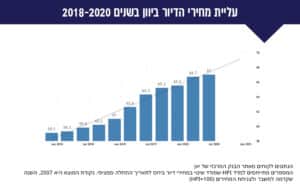
The rise in prices during the pandemic can be attributed to the low starting point from which Greece entered the COVID-19 crisis in the first place —the fact that prices had only just begun to rise after a decade of relentless declines, as well as the global interest during the pandemic in purchasing distant properties and vacation homes, especially those with “outdoor spaces,” as an escape from lockdowns. Investors during that period sought to diversify their investments and purchase vacation apartments, with an emphasis on those in close geographical proximity.
Data from the Bank of Greece shows that the first half of 2025 marks the strongest performance of the Greek real estate market in two decades. According to the data, housing prices in urban areas jumped by 6.2% during the first quarter of that year compared to the same period the previous year, and by 7.3% in the second quarter. The price increases were mainly recorded in the major cities, Athens and Thessaloniki, where prices jumped by 5.5%–10% in the first quarter of 2025 compared to the same period a year earlier, and by 5.9%–8.8% in the second quarter. In other cities, prices rose during this period by an average of 7.3%–8.0%.
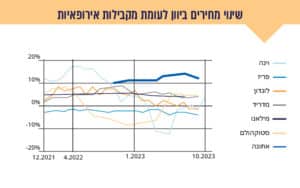
In December 2025, the Spitogatos Index (SPI) released a report stating that Athens continues to lead Europe in terms of housing price growth. According to the data, home prices in Athens surged by 8.1% in the fourth quarter of 2025 compared to the same period a year earlier—double the increase in Stockholm and nearly three times the modest growth in Paris, the report noted. These facts highlight the potential inherent in purchasing property in Greece, particularly in Athens, as a profitable long-term investment. It should be noted that the rise in housing prices in Athens occurred in contrast to slow growth or declines in major European cities (London, Paris, and Berlin, for example), where lower growth rates were recorded in 2025 due to economic pressures and rising interest rates.