


Short answer:
The recovery of the Greek economy is gradually reviving the mortgage market. As financing becomes more accessible, more local buyers are able to enter the market, demand is growing, and this may support rising prices in sought-after areas.
How will the Greek economy's growth in 2026 affect the real estate market?
What about mortgages?
With the onset of the crisis, and following the “austerity plan” devised by the European Union, the option of taking out mortgages was virtually closed off to Greek citizens. If anything, citizens were “forced to sell” their apartments due to their inability to repay mortgage loans, so they certainly could not take out new loans. As the economy recovered, banks began to slightly ease the terms for housing loans and gradually open up this option, but the ability to obtain a mortgage from a bank in Greece remains extremely limited. It is important to remember that real estate prices are a combination of construction costs and financing, meaning the scale of construction and the ability to secure a mortgage. Once the financing component is compromised—that is, the Greek public’s ability to take out a mortgage—there is a “glass ceiling” on real estate prices. Once the mortgage market fully recovers, and investors are also able to take out mortgages, the expectation is that real estate prices in the country will rise significantly.
One factor that has had a significant impact on the "contraction" of the mortgage market is the rise in interest rates. Mortgage rates in Greece are rising as a result of the European Central Bank’s (ECB) efforts to curb inflation. Since July 2022, the ECB has raised the eurozone’s key interest rate ten times in a row, causing mortgage rates in Greece to rise to 4.29% as of September 2023, up from 2.87% two years earlier.
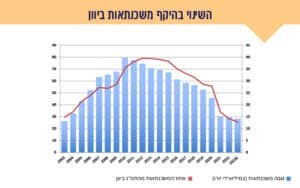
In summary, the fact that access to mortgages remains limited for Greeks is the main reason why the Greek market is far from reaching its full potential. Once access becomes more widespread, prices are expected to rise significantly.
Data as of 2025
As of 2025, the average interest rate on new mortgages in Greece ranges from 4.33% to 4.45%, according to first-quarter 2024 data. This figure is significantly higher than the 2.87% rate two years ago, demonstrating the significant impact of the European Central Bank’s interest rate policy. According to the Bank of Greece report, the average interest rate on new housing loans fell slightly in December 2024 to 3.59% for variable-rate loans, but the rate on fixed-rate loans remains at 4.20%–5.21%.
Mortgage Market Size and Terms
The market continues to pick up, particularly for foreign investors, and the government has eased mortgage eligibility requirements for EU residents, including the elimination of the minimum down payment requirement. European residents can obtain financing for up to 70%–80% of the purchase price, while other foreigners can typically obtain up to 70%. The repayment period ranges from 15 to 30 years, and the monthly payment depends on the interest rate and loan terms.
In 2024, the volume of housing loans in Greece declined slightly, though not at the dramatic rate seen in previous years, reflecting a market recovery. According to quarterly reports, the volume of housing loans fell by 13.3% in 2023, but in 2024, some stability was observed, although it remained below the peak levels of previous years.
Market Structure: Cash vs. Mortgages
About 80% of real estate transactions are still conducted in cash, but there is an upward trend in mortgage lending, particularly among foreign investors and European residents. The mortgage market continues to develop, but it remains underdeveloped compared to Western countries.
Palmo is changing the game – an Israeli mortgage for purchasing property in Greece
Palmo is changing the game for its customers: For the first time in Israel, you can take out an Israeli mortgage, in Hebrew, in just minutes—to purchase real estate in Greece.
Palmo offers mortgages secured by property in Greece, with attractive financing terms: up to 50% financing, terms of up to 20 years, and staggered payments based on the project’s progress.